
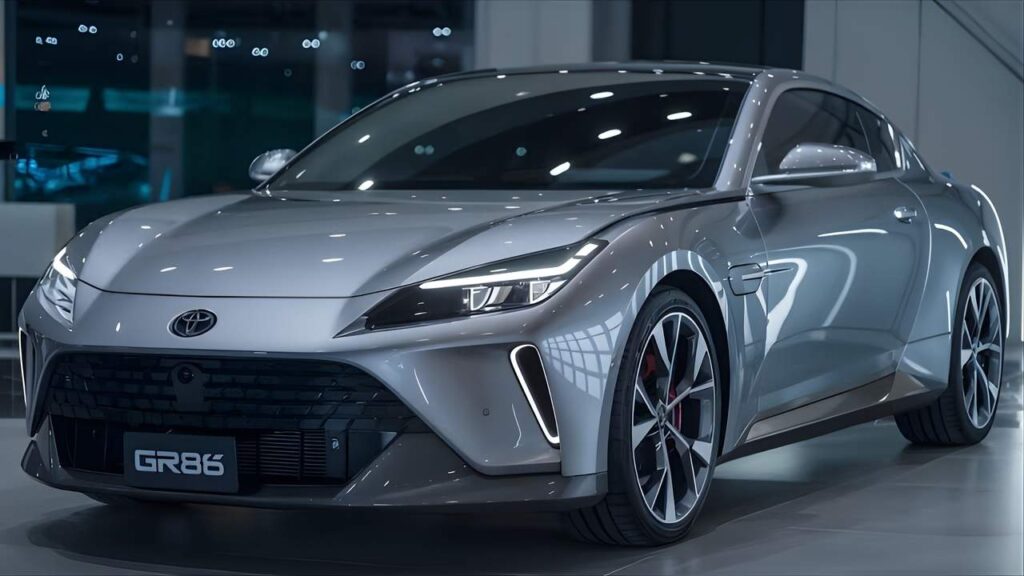

In 2026, the Toyota GR86 keeps a rare position in the sports-car world. It does not chase extremes. It does not hide behind huge power. Instead, it protects a simple idea: a light coupe with rear-wheel drive can still deliver real driving feel in a modern era.
Toyota built the GR86 to translate input into motion with very little filtering. You steer, it turns. You lift, it rotates. Press the throttle, it settles and drives out. The car teaches cause and effect, which modern performance cars often soften with electronics and mass.
This GR86 speaks to enthusiasts who want skill to matter. New drivers can learn balance and control without fear. Experienced drivers can enjoy a machine that stays honest at real road speeds, not only at the limit.
2026 Toyota GR86
The 2026 Toyota GR86 stays true to the classic sports-coupe layout: engine in front, drive to the rear, low roof, short overhangs. The concept stays clean. Toyota aims for balance and response, not brute force.
A car like this still exists because Toyota chooses to support enthusiasts in a serious way. Gazoo Racing now acts as Toyota’s performance voice, but not every GR car needs turbo torque and wide tyres. The GR86 sits at the lightweight edge of that plan: simple, direct, and driver-led.
For 2026, Toyota appears to keep the core mechanical package familiar. Toyota’s public GR86 materials continue to reference the 2.4-liter naturally aspirated flat-four with output around 228 hp and 184 lb-ft. That points to continuation, not reinvention. Some packaging and edition changes may appear by region, but the foundation looks stable.
Most buyers choose a GR86 because they want a focused hobby car they can drive often. They enjoy tight roads, control inputs, and small upgrades over time. Many owners keep the car long-term and treat it as a personal tool for learning and refinement.
Toyota GR86 2026 Key Specifications
| Car Name | 2026 Toyota GR86 |
| Body Style | Coupe |
| Platform / Chassis Type | Lightweight front-engine, rear-drive sports coupe structure |
| Engine Layout | Front-engine |
| Engine Type | Naturally aspirated flat-4 (boxer) |
| Displacement (estimated) | 2.4L |
| Power (estimated) | ~228 hp |
| Torque (estimated) | ~184 lb-ft |
| Transmission (Manual / Automatic) | 6-speed manual / 6-speed automatic |
| Drivetrain (RWD) | Rear-wheel drive |
| Fuel Type | Petrol (gasoline) |
| Seating Capacity | 4 (2+2 layout) |
| Curb Weight (approx.) | ~2,850–2,950 lb |
| Performance Focus | Balance, low mass response, progressive handling |
| Safety Structure Level | Modern reinforced coupe shell with engineered crumple zones |
| Dimensions | ~167 in L / ~70 in W / ~52 in H (approx.) |
| Wheelbase | ~101 in (approx.) |
| Tyre Setup | Square setup likely; ~215–235 width by trim |
| Brakes (type and size estimate) | 4-wheel discs; ~11.6–12.4 in front / ~11.4 in rear |
| Price Range (estimated) | ~US$32,000–$38,000 |
| Target Buyers | Enthusiasts who want mechanical feel and long-term ownership |
Configuration Strategy & Production Intent
Toyota will likely keep the GR86 range simple. Expect one trim that stays close to the core idea, one trim that adds comfort and design detail, and limited editions that bundle chassis upgrades and heritage themes without changing the car’s mission.
- Standard mechanical setup (engine + chassis baseline): 2.4 NA flat-four, rear-wheel drive, tuned stability control, firm basic suspension tuning.
- Performance-oriented options (brakes, damping, tyres, LSD tuning): factory packages may include stronger brakes and upgraded dampers, plus tyre changes and limited-slip tuning.
- Appearance or heritage packages (GR styling, aero, stripes, interior themes): special editions may use heritage colors and interior accents (Toyota has used nostalgic themes recently).
- Regional availability / production expectations: Toyota will likely limit supply compared with mainstream cars, and special editions will vary by market.
- Toyota often adjusts trims year to year. Supply, vendor changes, and market rules can reshape packages fast. Buyers should expect minor shifts in content without major mechanical change.
Exterior Design & Structural Form
The GR86 exterior serves a purpose: keep airflow stable, keep cooling reliable, and keep proportions tight. Toyota avoids oversized wings and heavy aero shapes because the GR86 does not need them to feel alive. Low mass and good geometry already do most of the work.
- Body panels and materials (steel/aluminium mixes, weight logic): Toyota will likely mix steel structure with lighter outer panels where weight reduction matters.
- Side profile proportions (wheelbase, cabin placement, coupe shape): short wheelbase, rear-set cabin, low hood line, compact glasshouse.
- Rear design and exhaust layout (dual outlets, diffuser restraint): dual exhaust outlets with a modest diffuser form that supports flow without drama.
- Optional aerodynamic elements (lip spoiler, GR aero kit, track add-ons): small lip spoilers and subtle splitters likely appear as factory or dealer options.
- The GR86 keeps a functional shape because Toyota treats it as a real production sports coupe. The design supports driving first, not attention.
Powertrain Architecture & Driving Output
Toyota uses a simple formula here: a naturally aspirated engine for clean throttle response, matched with gearing that keeps the driver involved. The drivetrain exists to deliver balance and consistency, not a shock of torque.
| Engine | Power | Torque | Transmission | Drivetrain |
|---|---|---|---|---|
| 2.4L naturally aspirated flat-4 | ~228 hp | ~184 lb-ft | 6MT / 6AT | RWD |
On the road, the GR86 should feel sharp rather than forceful. It will not slam forward like a turbo car. Instead, it will build speed cleanly as revs rise. It should react fast to small throttle changes, which helps a driver shape a corner with the right foot. The manual matters because it turns each upshift and downshift into part of the experience, not just a method of travel.
Interior Layout & Driver Environment
Toyota designs the GR86 cabin around driving, not decoration. The car puts the driver low, keeps the wheel close, and aims for quick readability. You should feel like you sit inside the chassis, not on top of it.
- Dashboard & Controls
- Toyota likely keeps the layout simple: instruments near the wheel, a screen placed high for quick glances, and physical controls for key functions. Buttons matter because they let the driver adjust settings without losing attention.
- Seating Position & Restraints
- A proper sports coupe needs a low hip point and supportive seat shaping. Expect moderate bolsters that hold the body in corners without forcing discomfort. Harness use can work in enthusiast contexts, but the GR86 still targets everyday drivability, so Toyota will keep standard belts and airbags central.
- Materials & Finish
- Toyota will likely use durable surfaces with grippy textures where hands touch often. Higher trims may add suede-like inserts and GR branding, but weight and cost limits will prevent heavy luxury materials.
- Visibility & Safety Awareness
- The GR86 should keep good forward sightlines thanks to a low hood. Pillars will still carry modern crash structure, but Toyota can manage confidence through mirror placement and clear window lines.
In the end, the interior supports control. It avoids distraction so the driver can focus on timing, line, and smoothness.
Chassis, Suspension & Steering Behavior
Toyota tunes the GR86 for balance first. The chassis must resist unwanted flex so suspension geometry stays consistent under load. That stiffness gives the driver a stable platform for clean rotation.
Steering feel matters more than steering weight. The GR86 should load the front tyres progressively, so the driver senses grip build-up early. That clarity helps smooth inputs and prevents sudden corrections.
Ride firmness will remain noticeable, but the best GR86 tuning avoids harshness. A good lightweight coupe uses movement to communicate surface changes. It should absorb imperfect roads without losing its line or skipping across mid-corner bumps.
Fuel Use & Mechanical Efficiency Direction
Toyota treats efficiency as a side benefit, not the mission. Low mass helps fuel use naturally, but Toyota will tune the GR86 for response and drivability, not maximum economy.
- Expected fuel consumption behavior: likely mid-20s mpg combined depending on transmission and driving style; Toyota-linked listings cite around 22 combined for manual and 24 for automatic formats.
- Electrification likelihood: very unlikely for 2026; hybrid weight would fight the GR86 purpose unless Toyota redesigns the whole package.
- Efficiency trade-offs tied to naturally aspirated tuning: NA engines reward revs, and revs consume fuel — especially in the kind of driving this car encourages.
Wheels, Tyres & Road Contact
The GR86 depends on tyre behavior more than power. The right tyre lets the chassis move progressively and predictably. Toyota must choose tyres that communicate grip loss early, not tyres that simply mask it with high peak adhesion.
- Wheel construction (alloy emphasis): lightweight alloys as standard; stronger/lighter designs possible in option packs.
- Tyre compound approach (road vs performance): road-focused tyres likely on base versions; higher-grip summer tyres on performance packages.
- Staggered setup likelihood: a square setup remains most consistent with balance and rotation; mild stagger could appear on appearance-driven editions.
- Ride height posture: low and level, designed to support stability and quick response.
- Ground clearance relevance: enough for real roads if driven with care; not designed for rough surfaces.
- Traction behavior and breakaway predictability: gradual breakaway remains key — the GR86 should slide with warning, not snap without notice.
Technology & Driver Information Systems
Toyota should keep tech in the background. The GR86 needs good information and modern connectivity, but it cannot let screens take over the experience.
| Category | 2026 GR86 Approach (expected) |
|---|---|
| Driver display | clear digital cluster with driving-focused layout |
| Connectivity level | modern phone integration; stable and simple |
| Physical vs digital controls | physical controls for key functions, touchscreen for secondary tasks |
| Software philosophy | low distraction, quick response, minimal menu depth |
Safety Systems & Structural Protection
Toyota must meet modern safety requirements, even in a lightweight coupe. That forces stronger structure and more systems, but Toyota can tune these features to support the driver instead of replacing them.
- Structural rigidity and crumple philosophy: strong cabin cell with controlled front and rear crush zones.
- Passive safety elements: multi-airbag setup, belt pretensioners, load limiters.
- Stability control tuning: likely multiple modes; partial-off behavior remains plausible for enthusiast use.
- Driver assistance limits: AEB and lane warning systems remain likely given Toyota’s wider direction, but trims and regions may change exact content.
- Parking aids (if any): basic camera and sensors likely; not identity-defining.
- Emergency systems: AEB and alert functions probable but equipment-dependent, so buyers should verify by trim.
Estimated Cost Positioning & Buyer Profile
| Market | Estimated Price Range (USD) |
|---|---|
| United States | ~$32,000–$38,000 depending on trim/special editions |
| Canada (rough equivalent) | generally higher after market differences; dealer listings vary |
Toyota prices the GR86 like a niche product, not mass transport. Buyers expect a strong chassis, a real manual option, and a car that encourages long-term ownership. The value comes from feel and balance — not plush features.
Market Comparison Perspective
The GR86 lives in a narrow corner of the market where low mass and rear-wheel drive still matter. Some cars share parts of its mission, but each follows a different logic.
| Vehicle | Core Philosophy |
|---|---|
| Mazda MX-5 Miata | lightness first, open-top purity, lower power but sharp feel |
| Subaru BRZ | same essential idea, tuning personality differences |
| Hyundai Elantra N | front-drive performance with strong electronics; different goals |
| Nissan Z | more power and weight; more GT muscle character |
| Used Porsche Cayman | mid-engine precision benchmark; higher cost and refinement |
The GR86 avoids direct rivalry by focusing on a specific experience: controlled rotation, readable grip, and a steady learning curve. It wants the driver to improve, not just consume speed.
Toyota GR86: Confirmed or Evolving?
For 2026, most signs point to continuation. Toyota still references the same output from the 2.4-liter naturally aspirated flat-four, which supports a carryover story.
Uncertainty remains around exact trims, option bundles, and limited editions. Media reports often capture special-package details earlier than official pages, but those changes rarely alter the core GR86 formula. A full redesign seems unlikely for 2026; small updates and new editions seem far more realistic.
Use Case Evaluation & Overall Balance
Most owners will use a GR86 for weekend roads, club drives, and occasional structured events. The car fits those habits because it delivers feedback at sane speeds. It does not require extreme velocity to feel alive, which keeps the experience repeatable and sustainable.
The GR86 holds a careful balance: old-school simplicity mixed with modern production safety, modern build standards, and an engine that favors response over brute output. It carries the AE86 spirit in a modern way; not through imitation, but through discipline: light weight, rear drive, and honest mechanical behavior.