
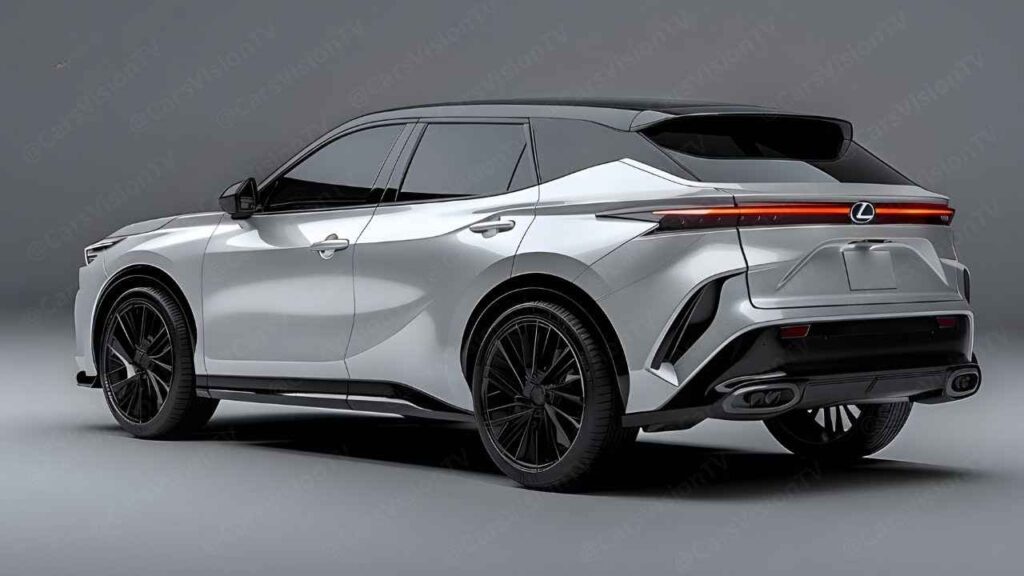

The 2026 Lexus NX Hybrid stays relevant because it keeps daily costs under control while delivering steady comfort and consistent hybrid operation. Many owners choose it because it does the same things well year after year, without needing special attention.
Its compact SUV size makes city life easier. You can drive it through narrow streets, fit into typical parking spaces, and handle tight turns without the bulky feel of larger SUVs.
For 2026, Lexus focuses on refinement rather than change for change. Updates target quieter cabin behavior, smoother system responses, and cleaner technology interaction so controls feel more natural in daily use.
In real ownership terms, the NX Hybrid aims to reduce effort. It supports routine commuting, family errands, and long trips with low stress instead of short-term thrills. Now let’s walk through how the 2026 Lexus NX Hybrid works as an everyday vehicle you can keep for the long run.
2026 Lexus NX Hybrid
The 2026 Lexus NX Hybrid is a compact luxury SUV with a petrol-electric hybrid system and common AWD availability. It targets owners who want efficiency without giving up cabin calm and year-round traction.
It fits mixed use well: weekday commuting, school runs, shopping, and motorway travel. It handles frequent short trips without punishing fuel use and stays stable during longer highway days.
Most buyers prioritise quiet comfort, predictable running costs, reliable hybrid behaviour, and manageable service needs. The NX Hybrid focuses on ownership stability rather than dramatic driving character.
Must Look Specifications of 2026 Lexus NX Hybrid
| Model Name | 2026 Lexus NX Hybrid |
| Body type | Compact luxury SUV |
| Seating capacity | 5 |
| Hybrid system type | Self-charging hybrid |
| Engine / motor layout | 2.5L I4 petrol + front e-motor; rear e-motor for AWD |
| Transmission | eCVT |
| Drivetrain | Electronic AWD |
| Total system output (hp / kW) | ~240 hp / ~179 kW |
| Battery type (hybrid) | Lithium-ion hybrid pack |
| Fuel type | Regular petrol / gasoline |
| Fuel tank capacity (gal / L) | ~14.5 gal / ~55 L |
| Estimated fuel economy (city/highway/combined) | ~41/37/39 mpg (US) • ~5.8–6.2 L/100 km |
| Ground clearance (in / mm) | ~7.8 in / ~198 mm |
| Cargo volume (rear seats up/down) | ~22 / ~46 cu ft • ~623 / ~1,303 L |
| Towing capacity (lb / kg) | ~2,000 lb / ~907 kg (region dependent) |
| Ride comfort focus | Quiet, controlled, comfort-led |
| Safety technology level | High |
| Estimated pricing range | ~US$45k–$60k equivalent (market dependent) |
Exterior Design & Dimensions
The NX Hybrid works well in everyday spaces because it stays compact for its class. You can place it easily in car parks, and it feels manageable in traffic. Visibility stays good forward, while the rear window and pillars can reduce rearward view, so cameras matter. The shape supports efficiency and reduces wind noise on highways. Wheel size changes real ownership comfort: 18-inch wheels usually ride softer and cost less to replace, while 20-inch wheels can add firmness and tyre noise.
Lexus NX Hybrid 2026 Variants
| Variant | Best fit for | Main differences |
|---|---|---|
| NX Hybrid Standard | Practical ownership | smaller wheels, simpler trim |
| NX Hybrid Premium | Daily convenience | added comfort features, tech upgrades |
| NX Hybrid Luxury | Long-trip comfort | richer materials, more adjustments |
| NX Hybrid F SPORT Design | Styling preference | visual upgrades, often larger wheels |
All trims keep the same hybrid system, core comfort tuning, and safety suite. Trims mainly change wheel size, upholstery, audio level, cameras, and extra tech features.
Mechanical & Platform Focus
The NX Hybrid platform supports smooth commuting, stable motorway cruising, and consistent hybrid behaviour. Lexus tunes it to cut vibration and road noise and to keep the car calm over rough surfaces.
- Uses a 2.5L-class petrol engine with electric motor support
- Switches between electric assist and engine drive in a controlled, low-drama way
- Delivers eCVT response that rewards smooth throttle inputs rather than “shift chasing”
- Runs AWD through a rear e-motor that reacts fast to slip but avoids heavy off-road demands
- Tunes suspension for speed bumps, patched roads, and broken city surfaces
- Blends regen braking with friction braking; pedal feel can feel different at low speed until you adapt
Launch & Availability
Lexus usually rolls out NX Hybrid supply in stages. Some markets receive AWD hybrids first due to demand and allocation planning, while others get limited trim variety early.
| Region | Expected pattern |
|---|---|
| North America | early availability; high trims can sell quickly |
| UK | hybrid-focused mix; spec depends on tax structure |
| EU | market-specific packages and equipment bundles |
| Australia / NZ | fewer trims; AWD hybrid often prioritised |
| Japan | strong home-market supply and options |
Hybrid Performance & Driving Character
In daily driving, the NX Hybrid behaves like a smooth, quiet commuter SUV. It moves off cleanly in stop-start traffic and keeps power delivery predictable instead of dramatic.
| Mode | Throttle feel | Engine start | Steering | Fuel tendency |
|---|---|---|---|---|
| Normal | balanced | starts when needed | medium | balanced |
| Eco | gentler | stays off more | lighter | lowest |
| Sport | sharper | starts earlier | heavier | higher |
The car suits city use because it responds smoothly at low speeds. On highways, it stays stable and calm, with controlled wind noise for a compact SUV. During overtakes, the eCVT can hold engine speed instead of shifting, so acceleration can feel steady rather than stepped.
Interior Layout & Practicality
The seating position helps daily comfort. You step in without climbing and sit high enough for a clear road view. The front seats support long drives, and most drivers can find a good position thanks to wide seat and wheel adjustment range.
Rear seating works well for adults on typical trips, though it won’t match larger SUVs. Door openings help when fitting child seats, and the anchors stay accessible. With a bulky rear-facing seat, the front passenger may lose some space.
Cargo access stays practical. The tailgate opening suits shopping, prams, and luggage. A flat load floor helps sliding items in, and underfloor storage handles small tools, chargers, and emergency items. Cabin storage supports real life: usable cupholders, door bins for bottles, and a centre console that takes everyday clutter.
Technology & Controls
- Places infotainment screen high enough for easy glance use
- Improves response speed, but deep menus still slow simple changes
- Keeps climate operation workable; owners prefer physical shortcuts when available
- Shows clear driver display info without clutter after setup
- Uses steering wheel buttons that require learning but save time later
- Offers wireless charging, but phones can heat up or shift on bumps
- Adds connected services; many owners skip subscriptions and use phone apps instead
Over months, most owners set up favourites and stop exploring menus. They keep what works, disable what irritates, and rely on simple functions daily.
Ride Comfort & Handling Balance
The NX Hybrid handles poor roads with controlled comfort. It absorbs sharp edges without constant suspension noise and stays composed over speed bumps. On the motorway, it tracks straight and resists crosswinds well for its size. Steering stays stable and predictable rather than sporty. Larger wheels can reduce comfort and raise tyre replacement costs.
Fuel Use & Ownership Considerations
- Expect around 34–42 mpg (US) depending on traffic, temperature, and tyres
- Cold weather lowers mpg as the engine runs more often for heat
- City and suburban driving delivers the strongest hybrid advantage
- Smooth driving improves electric assist time and reduces engine cycling
- Service visits stay routine: oil/filter work, checks, fluids, filters
- Hybrid battery design targets long life; age matters more than mileage
- 12V battery health still matters; weak 12V can trigger odd warnings
- AWD can increase tyre wear if pressures vary
- Regen can extend brake life compared with non-hybrids
- Insurance varies by region; tyres and depreciation often shape costs more than fuel
Safety & Driver Assistance
The NX Hybrid safety systems support daily driving without constant interference when you set them properly.
- AEB can brake hard for sudden cut-ins or tight situations
- Adaptive cruise reduces fatigue but can leave a larger following gap
- Lane centring works best with clear markings and can disengage on poor roads
- Blind spot monitoring helps due to rear pillars
- Parking cameras and sensors reduce stress in tight spaces
- Driver monitoring can trigger alerts from normal mirror checks
- Owners often lower sensitivity after the first few weeks
Lexus NX Hybrid Price 2026
| Region | Estimated pricing (range) |
|---|---|
| United States | US$45k–$60k |
| Canada | CA$55k–$72k |
| UK | £45k–£58k |
| EU (general) | €52k–€70k |
| Australia / NZ | AU$75k–$95k / NZ$85k–$110k |
| Japan | ¥5.5M–¥7.2M |
Taxes, import rules, and standard equipment bundles cause large regional gaps. Dealers often allocate popular trims first, so AWD hybrid mid-to-high trims can become harder to find. Wheels, roof options, camera packs, and audio upgrades usually drive the biggest final price jumps.
Who Should Buy the 2026 Lexus NX Hybrid?
The NX Hybrid suits commuters, small families, and long-term owners who drive often in traffic and want calm comfort with consistent fuel use. It fits people who want a premium cabin and low daily effort without moving into a larger SUV.
It may not suit drivers who demand a sporty feel, need heavy towing, carry very large cargo often, or strongly dislike eCVT behaviour. As a long-term daily SUV, it prioritises ease, quietness, and ownership stability.