
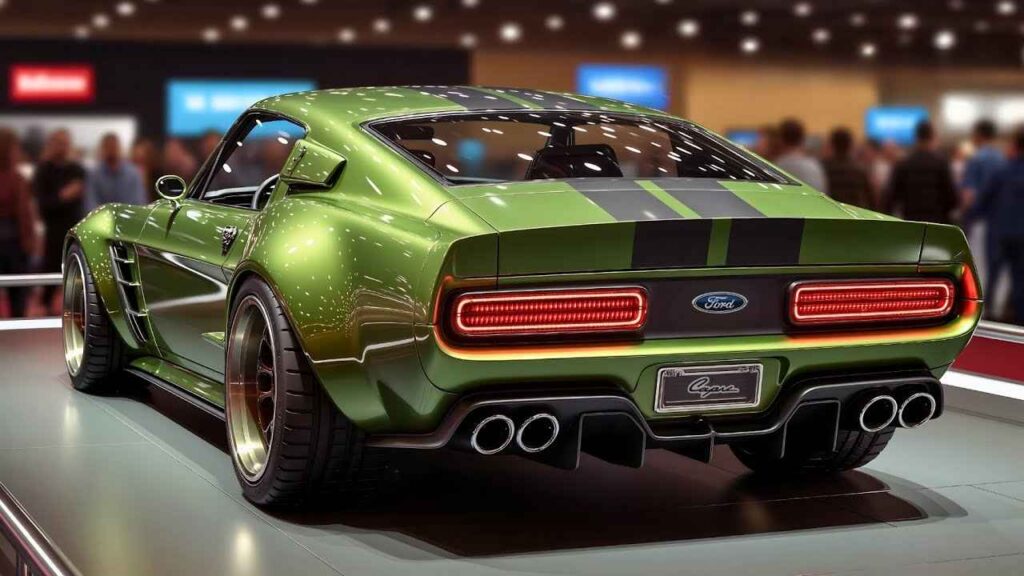

The 2026 Ford Capri functions as an electric coupe-style SUV position between compact crossovers and larger family EVs. It uses a five-door layout, moderate ride height, and a sloping roof to balance space with visual flow.
This model aims to combine electric efficiency with a coupe-inspired body and crossover practicality. It uses an aerodynamic shape, controlled proportions, and an electric platform designed for daily use rather than extremes. The result targets drivers who want style without sacrificing usability.
Ford directs the Capri toward buyers who live with their vehicles every day. Urban commuters, small families, and design-conscious EV owners sit at the center of its audience. The vehicle prioritizes comfort, efficiency, and visual restraint over performance statements.
2026 Ford Capri
The 2026 Ford Capri represents a clear shift in how familiar vehicle names adapt to the electric era. Instead of revisiting the past, Ford applies the Capri name to a modern electric vehicle shaped by today’s driving habits and urban needs. The focus stays on relevance, not nostalgia.
Ford adapts the Capri name to an electric format to support its European EV expansion. The name now signals a design-led vehicle rather than a performance identity, aligning with how buyers approach EV ownership today.
Ford has confirmed the Capri as a production-ready electric vehicle for Europe. While Ford has released core information, several technical details still depend on market rollout and final certification. Some figures remain estimated but grounded in shared platform data.
The Capri targets owners who want a calm, efficient electric vehicle that still stands apart visually. It suits drivers who prioritize daily comfort, predictable range, and modern design over high-output driving or rugged use.
Ford Capri 2026 Key Specifications
| Car Name | Ford Capri (2026) |
| Body Style | Electric Coupe SUV / Crossover |
| Platform Type | VW Group MEB electric platform |
| Powertrain Layout | Single-motor or Dual-motor |
| Battery Capacity (usable) | ~52 kWh / ~77 kWh / ~79 kWh |
| Power Output (estimated) | 125–250 kW (170–340 hp) |
| Torque (estimated) | 310–545 Nm (229–402 lb-ft) |
| Transmission | Single-speed |
| Drivetrain | RWD or AWD |
| Electric Range (estimated) | 560–627 km WLTP (348–390 miles) |
| Charging Type | AC up to 11 kW / DC fast charge up to ~185 kW |
| Seating Capacity | 5 |
| Curb Weight (approx.) | 2,100–2,170 kg (4,630–4,785 lb) |
| Ride Height Focus | Low-stance crossover |
| Safety Structure Level | Reinforced EV body with battery protection |
| Dimensions (L×W×H) | ~4,634 × 1,872 × 1,626 mm |
| Wheelbase | ~2,767 mm |
| Tyre Setup | 19–21 inch EV-focused tyres |
| Price Range (estimated) | €50,000–€63,000 ($54,000–$67,000) |
| Target Buyers | Urban EV users, design-focused families |
2026 Ford Capri Variants & Use
Ford designs the Capri lineup around everyday driving habits, charging routines, and climate needs, instead of focusing on wide performance differences or aggressive positioning.
- Capri RWD – Standard Battery:
- Suits city driving, short commutes, and regular home charging. Focuses on efficiency, lower weight, and reduced purchase cost.
- Capri RWD – Extended Battery:
- Works well for longer daily travel and frequent highway use. Reduces charging stops and improves flexibility for mixed driving routines.
- Capri AWD – Dual Motor:
- Supports drivers in wet or winter regions. Adds traction and stability rather than performance-focused driving behavior.
All variants share the same design, interior layout, and technology setup, allowing buyers to choose based on usage patterns instead of visual or feature differences.
Launch & Availability
Ford schedules the Capri’s market entry around Europe’s mature EV regions, with deliveries planned in stages to match production capacity and regulatory approvals.
| Region | Availability (Expected) |
|---|---|
| Europe | Early to mid-2026 |
| United Kingdom | Early 2026 |
| Asia-Pacific (select markets) | Late 2026 |
| Middle East | Late 2026 |
| North America | Not planned before 2027 |
Production follows Ford’s European electric manufacturing strategy, using shared platforms and suppliers to ensure stable output, controlled costs, and predictable delivery timelines.
Exterior Design, Coupe, & Road Presence
The Capri’s exterior design supports airflow efficiency and a stable road stance. The body sits lower than most SUVs, and the roofline tapers gradually to reduce drag.
- Narrow LED headlights replace traditional grille elements.
- Smooth side panels emphasize length and width.
- A full-width rear light bar defines the tail.
- Optional wheel and trim packages adjust visual tone.
The design avoids sharp edges or aggressive styling. It aims for longevity and visual balance rather than attention-seeking details.
Electric Performance & Real-World Driving Feel
The Capri delivers controlled electric performance tuned for daily conditions. Power delivery remains smooth and progressive across both motor setups.
| Motor Setup | Power | Torque | Drivetrain | Drive Modes |
|---|---|---|---|---|
| Single Motor | ~125–210 kW | ~310–450 Nm | RWD | Normal / Eco |
| Dual Motor | ~250 kW | ~545 Nm | AWD | Normal / Eco / Sport |
City driving feels responsive and easy to manage. Highway travel remains stable and quiet, with minimal vibration and predictable throttle response typical of modern EVs.
Interior Layout & Digital Cabin Experience
The interior follows a clean, functional layout focused on clarity and space. Ford reduces physical controls and relies on screen-based systems without overwhelming the driver.
- Large central touchscreen for navigation and media
- Digital driver display with range and efficiency data
- Flat floor improves rear passenger comfort
- Practical storage replaces decorative trim
The cabin supports relaxed daily driving rather than visual drama, keeping controls intuitive and distractions minimal.
Technology & Connected Features
The Capri uses Ford’s latest digital interface with an emphasis on simplicity.
| Feature Area | Approach |
|---|---|
| Central Display | Large landscape touchscreen |
| Driver Display | Digital cluster with EV metrics |
| Smartphone Integration | Wireless phone mirroring |
| Software Updates | Over-the-air system updates |
Ride Comfort, Chassis & Handling Balance
Ford tunes the suspension for mixed urban and highway use. The setup absorbs road imperfections without feeling soft or unsettled.
Steering response stays light and predictable, which suits city maneuvering and parking. Feedback remains filtered to prioritize comfort.
Despite the sloping roofline, the body stays controlled during lane changes and long motorway runs. The vehicle avoids top-heavy movement common in taller SUVs.
Wheels, Tyres & Road Suitability
Ford selects wheel and tyre combinations for daily comfort, efficiency, and predictable road behavior, rather than aggressive handling or visual-only upgrades.
- Standard 19-inch wheels focus on lower energy use
- Larger wheels slightly reduce range but enhance stance
- Moderate ride height improves curb and ramp clearance
- All-season tyres match typical European weather conditions
- Chassis tuning favors city streets and stable highway travel
This setup supports relaxed daily driving, smooth highway cruising, and consistent road confidence without prioritizing sharp handling or sporty feedback.
Energy Use & Charging Reality
The Capri emphasizes efficient everyday energy use through aerodynamic design and controlled weight, aiming to deliver consistent range and predictable charging behavior in real-world conditions.
| Charging & Efficiency Aspect | Expected Figures |
|---|---|
| Real-World Energy Use | ~16.5–18.5 kWh/100 km (3.3–3.8 mi/kWh) |
| DC Fast Charging (10–80%) | ~28–32 minutes |
| AC Home Charging | Overnight charging with 11 kW wallbox |
| Public AC Charging | Suitable for daily top-ups |
This charging profile supports daily commuting and routine travel, allowing owners to rely on home charging while using fast chargers mainly for longer highway journeys.
Safety Systems & Driver Assistance
Ford designs the Capri’s safety systems to support everyday driving, long-distance travel, and urban use, while meeting current electric vehicle safety standards.
- Reinforced body structure protects occupants and battery pack
- Active battery monitoring controls temperature and safety
- Adaptive cruise control reduces highway driver workload
- Stability systems manage traction and directional control
- Camera systems simplify parking and tight-space maneuvering
- Emergency braking detects vehicles and pedestrians
Together, these systems reduce driving stress, improve awareness, and support safe electric vehicle ownership across varied road and traffic conditions.
Price, Booking, & Buyer Profile
Ford expect to open online bookings first, follow by dealership-based configuration. Pricing reflects battery size, drivetrain choice, and shared platform efficiency.
| Variant | Estimated Price |
|---|---|
| Capri RWD (Standard Battery) | €50,000–€53,000 ($54,000–$57,000) |
| Capri RWD (Extended Battery) | €54,000–€57,000 ($58,000–$61,000) |
| Capri AWD (Dual Motor) | €59,000–€63,000 ($63,000–$67,000) |
The typical buyer values clean design, manageable ownership costs, and predictable electric driving. Most buyers prioritize daily comfort and range consistency over raw output.
Strong Rivals & Capri Stands Out Reasons
The electric coupe-SUV space continues to grow, with several established alternatives targeting similar buyers.
| Vehicle | Core Appeal |
|---|---|
| Volkswagen ID.5 | Familiar EV platform and balance |
| Tesla Model Y | Software ecosystem and charging access |
| Polestar 4 | Design-led minimalism |
| Cupra Tavascan | Sport-influenced styling |
The Capri stands out by avoiding extremes. It does not chase maximum range, fastest acceleration, or bold styling. Instead, it offers a calmer design, familiar brand approach, and practical electric ownership focus.
Who Should Buy the Ford Capri 2026?
The Ford Capri suits drivers who want an electric vehicle that blends into daily life without feeling generic. It works best for commuters, small families, and professionals who value efficiency, comfort, and clean design.
Buyers who prefer stable handling, quiet driving, and straightforward technology will find the Capri easy to live with. It delivers a balanced electric experience without demanding lifestyle changes or technical learning curves.
The Capri fits owners who want modern electric mobility packaged in a thoughtful, usable form rather than a statement vehicle.