
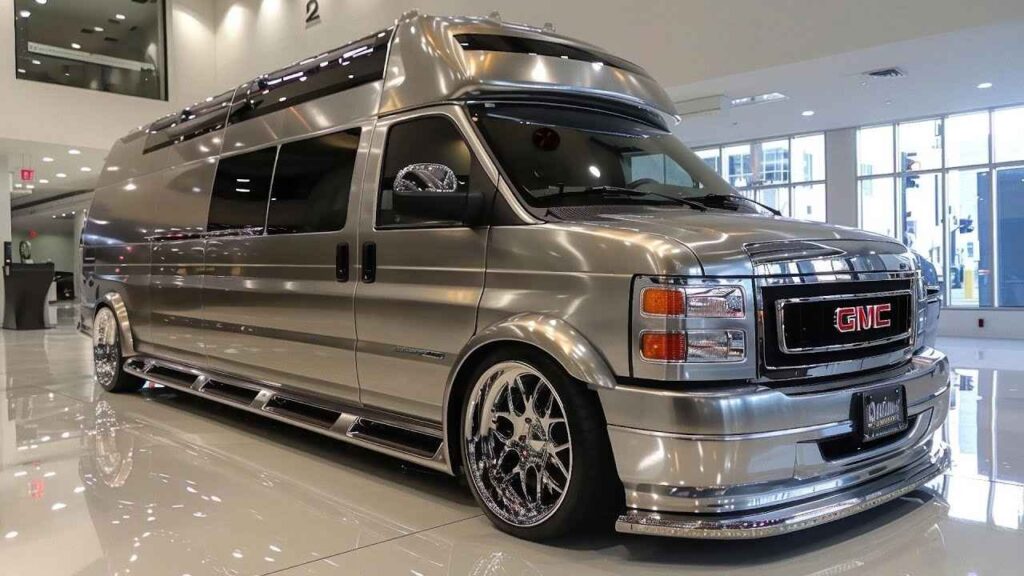

The 2026 GMC Savana Conversion Van is built for buyers who want a straightforward, dependable full-size van that can be adapted for travel, comfort, and everyday use.
Instead of chasing modern design trends, the Savana focuses on durability, strong engines, and a layout that conversion builders can easily transform into a road-trip or light-camping vehicle.
For 2026, this Conversion Van remains one of the last traditional American vans still using a truck-style frame and available V8 power, making it especially appealing to families, mobile workers, and casual van-life users.
2026 GMC Savana Conversion Van
The 2026 GMC Savana Conversion Van blends a rugged full-size van base with flexible interior setups tailored for travel, work, and daily use. Its proven mechanicals and spacious body make it a practical choice for varied lifestyles.
Buzz around the 2026 model highlights strong V6 and V8 engines, a straightforward conversion platform, and dependable performance. Buyers focus on comfort options, ease of service, and flexible seating or light camper layouts.
2026 Savana Conversion Van Key Specifications
| Model Name | 2026 GMC Savana Conversion Van |
| Manufacturer | GMC |
| Base Vehicle | Savana passenger or cargo van |
| Assembly Type | Body-on-frame construction |
| Engine Option 1 | 4.3-liter V6 |
| V6 Output | 276 horsepower / 298 lb-ft of torque |
| Engine Option 2 | 6.6-liter V8 |
| V8 Output | 401 horsepower / 464 lb-ft of torque |
| Transmission | 8-speed automatic |
| Drive Type | Rear-wheel drive |
| Frame Type | Body-on-frame steel construction |
| Fuel Tank Size | 31 gallons |
| Steering Type | Hydraulic power steering |
| Suspension (Front) | Independent with coil springs |
| Suspension (Rear) | Solid axle with multi-leaf springs |
| Overall Length | Approx. 224 inches |
| Overall Width | Approx. 80 inches (excluding mirrors) |
| Estimated Curb Weight | 6,000–6,800 lbs (before conversion) |
| Seating Capacity | 7–9 passengers (after conversion) |
| Sleeping Capacity | 2–4 occupants (layout dependent) |
| Electrical System | 12V automotive with auxiliary conversion battery |
| Towing Capacity | Up to approx. 10,000 lbs (V8, properly equipped) |
| Estimated Driving Range | 360–430 miles per tank (load & engine dependent) |
| Price | ~$44,000 – $130,000+ (Based on variant) |
Exterior Design & Practical Features
The outside of the 2026 Savana Conversion Van is simple and purposeful. Conversion builders usually add a high roof for standing room, tinted side glass for privacy, and integrated side steps for easier entry.
The flat body panels make it easy to mount accessories like roof racks, storage boxes, or awnings. Lighting upgrades are common and often include LED headlamps, roof-mounted marker lights, and rear utility lighting.
Storage is mostly internal, but hitch-mounted cargo trays and rear-access gear storage are popular options for travel-focused builds.
Size, Weight, & Capacity
- Overall Length – About 224 inches (standard wheelbase)
- Vehicle Height –
- Standard roof – ~82 inches
- Raised conversion roof – up to ~96 inches
- Gross Vehicle Weight Rating –
- 2500 series – approx. 8,600 lbs
- 3500 series – approx. 9,900 lbs
- Passenger Capacity – 7–9 seats after conversion
- Sleeping Capacity – Typically 2 adults, up to 4 with extended layouts
Interior Layout & Living Space
The interior is where the Savana Conversion Van becomes more than just transportation.
Seating and Sleeping
Most conversions use individual captain’s chairs or a rear bench that folds into a bed. When fully extended, the sleeping area usually measures around 70–75 inches long, enough for two adults to sleep comfortably.
Materials and Finish
Expect padded sidewalls, insulated panels, upgraded flooring, and leather or leather-style seating. The focus is comfort rather than luxury, with designs meant to be durable and easy to clean.
Storage and Amenities
- Overhead cabinets along both sides
- Under-seat storage compartments
- Optional wardrobe cabinet
- Available compact refrigerator and microwave
- Small countertop modules in select builds
These setups allow light cooking and short stays without full RV plumbing.
Technology and Comfort Equipment
Most conversion vans include rear entertainment systems, ceiling-mounted screens, Bluetooth audio, USB charging ports, and 110-volt outlets powered by an auxiliary battery. Climate comfort is improved with rear air conditioning and optional auxiliary heaters for cooler climates.
The driver area keeps GMC’s factory touchscreen system with smartphone integration, navigation support, and physical controls that are easy to use while driving.
Driving Experience & Performance
On the road, the Savana feels solid and stable. The V6 handles daily driving well, while the V8 offers noticeably stronger acceleration when the van is fully loaded.
Steering is heavier than modern unibody vans, but predictable. Highway driving relaxed, with the long wheelbase helping the van track straight even in crosswinds.
On gravel roads or campground trails, the Savana performs confidently, though it is not intended for serious off-road use without aftermarket suspension or tire upgrades.
Safety and Driver Assistance
Standard and commonly available safety features include:
- Rearview camera
- Stability and traction control
- Hill start assist
- Tire pressure monitoring
Advanced driver aids are limited compared to newer vans, but the Savana emphasizes mechanical reliability over electronic complexity.
Price & Booking
Prices for a 2026 GMC Savana Conversion Van vary widely because the base van and conversion package are sold separately. Buyers commonly choose a conversion company after purchasing the chassis and basic vehicle.
| Component | Typical Price (USD) |
|---|---|
| 2026 GMC Savana Base Van | $45,000–$55,000 |
| Mid-Range Conversion Package | $20,000–$40,000 |
| High-End Conversion Package | $50,000–$90,000+ |
| Total Estimated Cost | $75,000–$145,000+ |
Booking usually involves ordering the base van from a dealer, then arranging a conversion slot with a specialist builder. Lead times vary with demand and customization choices.
Ownership, Maintenance, & Warranty
One of the Savana’s strongest advantages is ownership simplicity.
- Factory Warranty –
- 3 years / 36,000 miles basic
- 5 years / 60,000 miles powertrain
- Service Network
- Widely available GMC service centers across North America
- Maintenance Costs
- Generally lower than European-based vans due to parts availability
Conversion components carry separate warranties depending on the builder.
Pros and Cons
- Pros
- Strong engine options with real torque
- Simple, durable construction
- Easy to customize
- Reliable nationwide service support
- Cons
- Older platform design
- Fuel economy is modest
- Limited factory driver-assist technology
How It Compares
- Ford Transit Conversion Vans – More modern interior and available AWD, but less towing confidence and no V8 option.
- Ram ProMaster Camper Vans – Better interior height and front-wheel drive traction, but lower payload capability and reduced durability under heavy loads.
The Savana stands out for buyers who value strength, simplicity, and long-term serviceability.
Who Should Buy the 2026 Savana Conversion Van?
The 2026 GMC Savana Conversion Van is best suited for weekend travelers, families, mobile professionals, and casual van-life users who want a dependable vehicle that can handle both daily driving and short adventures. It is not the most modern van on the market, but its strength, flexibility, and proven design make it a smart choice for buyers who prefer reliability over trends.
2026 GMC Savana Conversion Real or Fake
The 2026 GMC Savana Conversion Van is a genuine vehicle concept that exists through the combination of a real GMC Savana and real conversion work by aftermarket companies. It is not a factory-built motorhome but a legitimate custom-built travel van.
Some listings online may misuse the name or show inaccurate specs. Always verify that the base van is genuine GMC and that the conversion builder provides verifiable build details, warranty terms, and documented workmanship before purchase.