
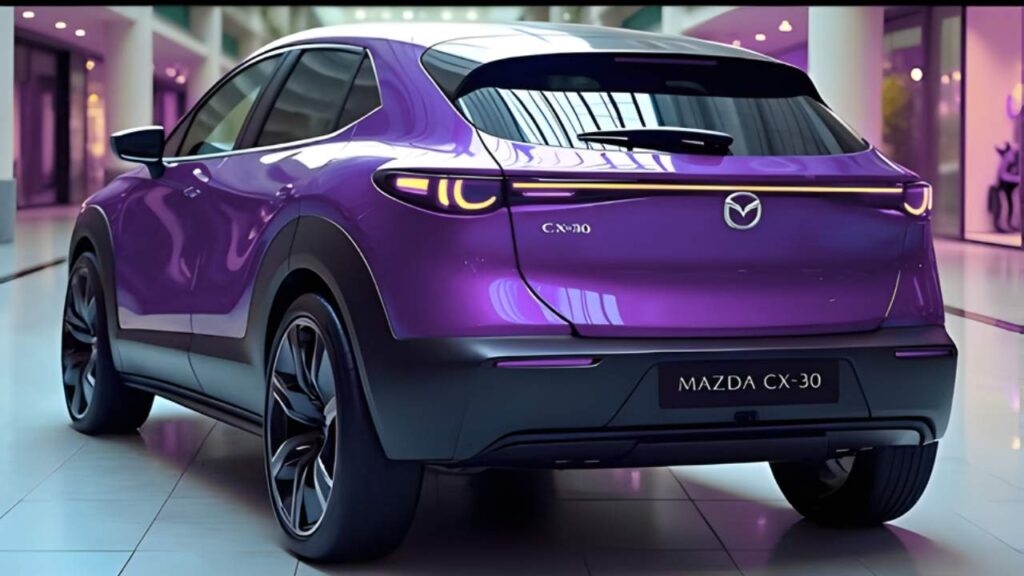

Most compact crossovers are judged within the first week of ownership, not during a test drive. Buyers quickly learn whether the vehicle fits daily parking spaces, handles traffic stress, keeps fuel stops reasonable, and stays comfortable after an hour behind the wheel.
The 2026 Mazda CX-30 enters this conversation without trying to reset expectations. Its size, proportions, and driving behavior remain consistent with prior versions, while updates quietly improve how the vehicle functions rather than how it presents itself.
Check out the CX-30 from an ownership perspective, concentrating on cost patterns, daily driving behaviour, space usage, fuel demands, and long-term livability; from the post below.
2026 Mazda CX-30
Within Mazda’s range, the CX-30 sits between the smallest Mazda offerings and the larger CX-5, aimed at buyers who want something compact without stepping into a mid-size SUV.
Its design suits routine commuting, mixed urban and highway use, and occasional extended trips, rather than constant heavy-duty or long-distance touring.
For the 2026 model year, Mazda focuses on refinement through feature updates, interface improvements, and safety enhancements while keeping the underlying structure unchanged.
What defines the CX-30 experience is its physical footprint, engine availability, interior layout, ride tuning, technology approach, and the effort required to live with it daily.
Shoppers considering a compact crossover usually focus on everyday realities: whether the vehicle feels manageable in traffic, stays comfortable beyond short trips, delivers enough power, uses fuel sensibly, and follows predictable ownership costs.
For the 2026 Mazda CX-30, the core vehicle remains recognizable. Buyers will mainly notice quieter refinements such as technology tuning, feature adjustments, and equipment updates rather than dramatic physical changes.
This guide explains the CX-30 from an ownership perspective, concentrating on daily driving behaviour, space usage, fuel demands, cost patterns, and long-term livability.
New 2026 Mazda CX-30 Specifications
| Model Name | 2026 Mazda CX-30 |
| Manufacturer | Mazda |
| Vehicle Type | Compact crossover SUV |
| Body Style | 5-door SUV |
| Available Trims | 2.5 S, 2.5 S Select, 2.5 Turbo |
| Launch / Update Type | New model year |
| Seating Capacity | 5 |
| Powertrain Options | Petrol, turbo petrol |
| Engine Options | 2.5L naturally aspirated, 2.5L turbo |
| Maximum Power | ~187–280 hp (trim-dependent) |
| Transmission | 6-speed automatic |
| Fuel Efficiency | ~10–14 km/l (24–33 mpg) |
| Fuel Tank Capacity | ~51 L (13.5 gal) |
| Suspension Layout | Front MacPherson, rear multi-link |
| Wheel Size Options | 18–20 inch |
| Kerb Weight | ~1,500–1,700 kg (3,307–3,748 lb) |
| Main Tech Updates | Infotainment and safety revisions |
| Safety Systems | Standard active safety package |
| Expected Price Range | ~$24,000–$35,000 |
| Target Buyers | Urban drivers, small households |
What Ownership Feels Like Over Time
In everyday use, the CX-30 feels easy to control in tight spaces, delivers sufficient highway power, and balances fuel consumption against comfort rather than outright performance.
- Primarily City Driving – Naturally aspirated trims offer smoother response and more consistent efficiency.
- Mixed City Highway Use – Mid-level trims add comfort without significant running cost increases.
- Power Focused Preference – Turbo versions deliver quicker response but demand more fuel.
Size That Helps More Than It Impresses
The CX-30’s exterior proportions remain compact enough for crowded streets while still feeling stable and confident at higher speeds.
| Dimension | Size |
|---|---|
| Length | ~4,395 mm |
| Width | ~1,795 mm |
| Height | ~1,540 mm |
| Wheelbase | ~2,655 mm |
Urban parking remains straightforward, and the raised seating position improves awareness without creating a bulky driving impression.
Engines Chosen For Calm Driving
Mazda offers two petrol engines, both focused on smooth delivery rather than aggressive tuning.
- 2.5L Naturally Aspirated Petrol
- Power: ~187 hp
- Best suited for city driving and relaxed highway use
- Smooth throttle response
- Better fuel efficiency
- 2.5L Turbo Petrol
- Power: up to ~250 hp (regular fuel) / ~280 hp (premium fuel)
- Stronger mid-range pull
- Easier overtaking on highways
- Higher fuel consumption
Both engines are paired with a 6-speed automatic transmission that shifts smoothly rather than quickly. The driving feel is calm and controlled.
Speed Is Adequate, Not the Main Focus
Straight-line acceleration remains adequate, with noticeable improvement in turbo-equipped versions.
| Situation | Result |
|---|---|
| 0 – 60 mph (standard engine) | ~8.2 seconds |
| 0 – 60 mph (turbo) | ~6.0 seconds |
| Long highway drives | Stable, low stress |
Suspension Tuning & Ride Comfort
Ride tuning prioritizes balance rather than softness.
- Road imperfections are filtered effectively.
- Body movement stays controlled during cornering.
- Long drives remain comfortable without excessive firmness.
Seating That Works Best in Front
The CX-30’s interior favors front passengers, especially on longer drives.
| Area | Measurement |
|---|---|
| Front Legroom | ~1,060 mm (41.7 in) |
| Front Headroom | ~960 mm (37.8 in) |
| Rear Legroom | ~910 mm (35.7 in) |
| Front Shoulder Room | ~1,410 mm (55.6 in) |
Front occupants remain comfortable over extended periods, while rear seating feels better suited for average-height passengers.
Ride Quality and Road Handling
The suspension tuned for balance rather than softness. In daily conditions –
- Rough patches are handled without sharp jolts
- Turns feel controlled, not floaty
- Long drives remain comfortable
This setup suits mixed road conditions commonly found in cities and on highways.
Cabin Materials & Build Quality
Mazda prioritizes how the cabin feels over time. Key characteristics are as follows –
- Soft materials where arms and hands rest.
- Physical switches for frequently used functions.
- Clean layout without unnecessary decoration.
The interior feels solid and durable rather than flashy.
Screen System & Controls
The infotainment layout favors clarity and reduced distraction over layered menus. Physical controls support quick adjustments, helping daily operation feel familiar within a short ownership period.
- Central display with simple menus.
- Smartphone connectivity.
- Physical controls for volume and climate.
This approach reduces distraction and makes daily use easier after a short learning period.
Storage Spaces & Family Practicality
Interior storage meets daily requirements rather than heavy family use. It is practical, though not design for heavy family use.
- Centre console compartment
- Door pockets for bottles
- Cupholders for front and rear passengers
Cargo Capacity ^ Rear-Seat Flexibility
Cargo space supports errands and short trips without matching larger SUVs.
| Configuration | Capacity |
|---|---|
| Rear seats in place | ~572 L (20.2 cu ft) |
| Rear seats folded | ~1,280 L (45.2 cu ft) |
This space is suitable for shopping, luggage, or weekend trips, but larger loads may require a bigger vehicle.
Fuel Use & Ownership Expectations
Fuel consumption reflects the CX-30’s balanced character.
- Non-turbo trims favor efficiency.
- Turbo trims trade fuel economy for performance.
- Overall running costs stay predictable.
Regular maintenance keeps ownership effort moderate.
Towing Capacity & Practical Boundaries
The 2026 Mazda CX-30 intends for light-duty towing only, supporting small trailers or compact equipment without placing sustained strain on its drivetrain or chassis.
| Capability | Rating |
|---|---|
| Maximum towing weight | ~907 kg (2,000 lb) |
Safety Features in Everyday Driving
- Automatic emergency braking
- Lane assistance systems
- Blind-spot alerts
- Rear cross-traffic warnings
These systems operate quietly, assisting without constant intervention.
Price Range and Trim Logic
The 2026 Mazda CX-30 follows a clear pricing ladder, with costs rising as buyers move from basic equipment toward stronger performance and added comfort features.
| Trim Level | Expected Price |
|---|---|
| Entry trims | ~$24,000 |
| Mid trims | ~$28,000–$31,000 |
| Turbo trims | ~$33,000–$35,000 |
Upper trims appeal to drivers who prioritize power and equipment depth, while entry versions remain better aligned with value-focused and efficiency-minded ownership.
Ownership Fit Based on Driving Pattern
The 2026 Mazda CX-30 fits drivers who value compact sizing, manageable running costs, and calm, predictable behavior during commuting, errands, and regular highway travel.
Drivers who often carry rear passengers or transport bulky loads may find space constraints noticeable, making larger crossovers better suited for those usage patterns.
Market Launch & Ordering Flow
The 2026 Mazda CX-30 enters markets as part of Mazda’s routine annual refresh, with availability coordinated around end-of-year manufacturing and distribution schedules.
| Step | Detail |
|---|---|
| Booking | Orders placed through authorized Mazda dealers |
| Delivery | Vehicles supplied through standard regional allocations |
Most regions should see consistent supply, although wait periods may differ depending on selected trim levels, dealer inventory, and regional demand patterns.
Balanced Daily Ownership
The 2026 Mazda CX-30 feels controlled and confident during everyday driving, handling city traffic and longer highway journeys with stable steering and a refined, predictable ride.
Buyers must accept modest cabin space and average fuel efficiency, but those prioritizing balanced size, smooth behavior, and long-term refinement are likely to stay satisfied.