
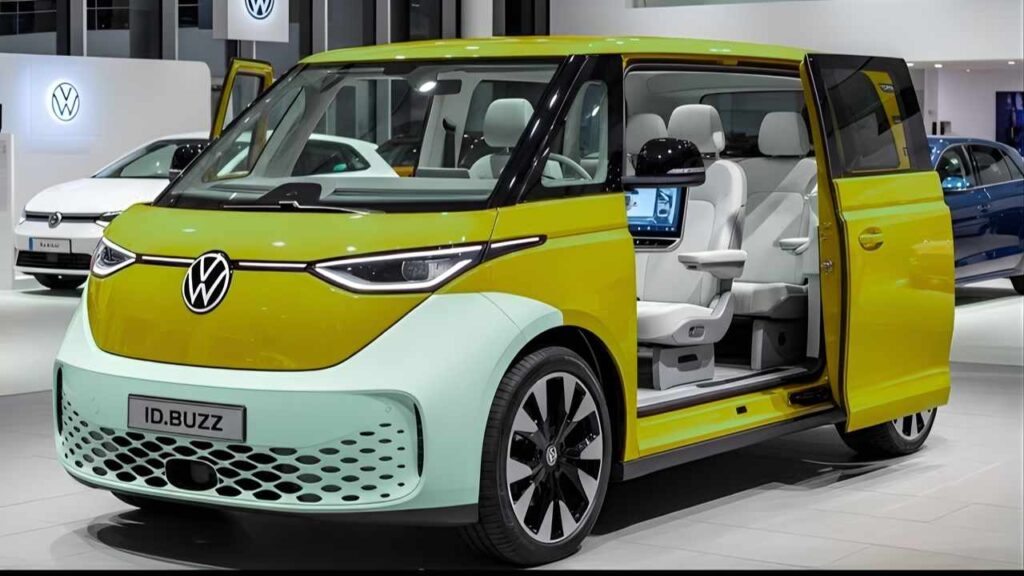

The 2026 Volkswagen ID. Buzz brings a fresh approach to electric mobility by focusing on people, space, & everyday usability. Instead of chasing performance headlines, Volkswagen design this vehicle to serve families, urban drivers, and lifestyle buyers who want comfort, flexibility, and zero-emission driving.
This electric van draws inspiration from Volkswagen’s historic Microbus, but it does not rely on nostalgia alone. The ID. Buzz combines a friendly design with modern electric engineering, advanced safety systems, and digital technology suited for today’s roads and expectations.
Built on Volkswagen’s dedicated MEB electric platform, the ID. Buzz delivers quiet driving, smooth power delivery, and a flat interior floor. These features allow more usable space and easier movement inside the cabin, especially for passengers.
For the 2026 model year, Volkswagen continues refining the ID. Buzz with updated software, improved efficiency, and expanded trim choices, strengthening its position in the growing electric family vehicle market.
2026 Volkswagen ID. Buzz
The 2026 Volkswagen ID. Buzz offers a useful electric range, generous interior space, and easy daily operation, making it a strong choice for buyers moving away from traditional fuel-powered family vehicles.
By combining efficient electric performance with practical design and clear purpose, the ID. Buzz fits well into the transportation needs and expectations of the global market in first Quarter (Q1) of 2026.
Volkswagen ID. Buzz 2026 Key Specifications
| Model Name | Volkswagen ID. Buzz 2026 |
| Launch Timeline | 2026 global rollout in Q1 |
| Vehicle Type | All-electric MPV / Passenger Van |
| Platform | Volkswagen MEB electric architecture |
| Seating Capacity | Up to 7 passengers |
| Drivetrain Options | Rear-wheel drive (RWD) / All-wheel drive (4MOTION AWD) |
| Battery Capacity (Usable) | Approx. 86 kWh |
| Power Output | 282 hp (210 kW) RWD / 335 hp (250 kW) AWD |
| EPA Range (Est.) | 234 mi (377 km) RWD / 231 mi (372 km) AWD |
| WLTP Range (Est.) | Up to 260 mi (418 km) |
| DC Fast Charging | Up to 170 kW |
| AC Charging | Up to 11 kW |
| Body Length | 195.4 in (4,962 mm) |
| Starting Price | US: ~$60,000 · EU: ~€58,000 · UK: ~£52,000 (Estimated) |
| Target Buyers | Families, urban EV adopters, lifestyle users, etc. |
What’s Changed For 2026 ID. Buzz?
For 2026, the ID. Buzz benefits from continued software improvements, smoother infotainment operation, and enhanced driver assistance calibration. These updates focus on improving daily usability rather than changing the vehicle’s core design.
- Improved energy management for more consistent real-world range.
- Faster infotainment response and updated interface.
- Expanded availability of all-wheel drive trims.
- Refined driver assistance behavior at highway speeds.
These changes help the ID. Buzz feel more polished and better suited for long-term ownership.
Exterior Styling: Modern Design with a Purpose
The exterior design balances approachability and function, with clean surfaces and rounded edges that improve aerodynamics while maintaining a distinctive van-like shape.
- Full-width LED lighting front and rear
- Optional two-tone paint schemes
- Large alloy wheels available on higher trims
Short overhangs and a long wheelbase emphasize interior space while giving the ID. Buzz a stable stance on the road.
Interior Space & Comfort: Built For Real Life
Inside, the ID. Buzz prioritizes openness and everyday comfort. The electric platform allows a flat floor, making movement between rows easier and improving overall space usage.
- Three-row seating with 5, 6, or 7-seat layouts.
- Sustainable and recycled interior materials.
- Flexible cargo space with fold-flat seats.
Large windows and an available panoramic glass roof increase natural light, creating a bright and relaxed cabin environment for passengers.
Electric Power, Performance, & Driving Feel
The ID. Buzz delivers smooth and quiet acceleration, focusing on comfort rather than aggressive performance. Power delivery feels predictable, which suits family driving and longer journeys.
| Performance Data | RWD | AWD |
|---|---|---|
| Power Output | 282 hp (210 kW) | 335 hp (250 kW) |
| Drivetrain | Rear-wheel drive | All-wheel drive |
| Battery (Usable) | ~86 kWh | ~86 kWh |
| 0 – 60 mph | ~7.0 s | ~6.0 s |
| 0 – 100 km/h | ~7.4 s | ~6.4 s |
On highways, the vehicle feels stable and composed, with minimal noise and vibration.
Suspension, Wheels & Comfort Ride Quality
Volkswagen tunes the suspension for comfort, ensuring the ID. Buzz handles rough city roads and long highway trips with equal ease.
- Front MacPherson strut suspension
- Rear multi-link suspension
- Comfort-focused damper tuning
This setup helps maintain a smooth ride even when the vehicle carries passengers or luggage.
Size, Space & Weight: How Big Is ID. Buzz?
The long wheelbase directly benefits passenger comfort and driving stability, especially at higher speeds.
| Dimension | Metric |
|---|---|
| Length | ~4,962 mm (~195.4 in) |
| Width | ~1,985 mm (~78.1 in) |
| Height | ~1,937 mm (~76.3 in) |
| Wheelbase | ~3,239 mm (~127.5 in) |
| Curb Weight | ~2,500 kg (~5,511 lb) |
Despite its size, the ID. Buzz remains easy to maneuver in daily driving.
Driver Safety & Assistance Technology
Safety systems in the ID. Buzz are designed to support the driver and reduce fatigue during daily use.
- Adaptive cruise control
- Lane keeping and steering assistance
- Automatic emergency braking
- Parking sensors and rear-view camera
These systems work together to enhance confidence without overwhelming the driver.
Real-World Range, Efficiency, & Energy Use
The EPA-estimated range reaches around 234 miles (377 km) for the rear-wheel-drive version, while the all-wheel-drive model delivers slightly lower range due to added weight. WLTP estimates extend to approximately 260 miles (418 km).
Average energy consumption ranges between 33–35 kWh per 100 miles (20–22 kWh per 100 km), which is reasonable for a vehicle of this size and passenger capacity.
Home & Fast-Charge Options of ID. Buzz 2026
The ID. Buzz supports flexible charging options suited to both home and public infrastructure.
| Charging Type | Capability |
|---|---|
| AC Home Charging | Up to 11 kW |
| DC Fast Charging | Up to 170 kW |
| 10–80% DC Time | ~30 minutes |
| Charging Standard | CCS |
This setup allows overnight home charging and quick top-ups during longer trips.
Steering, Braking, & Handling on Road
Light steering effort and a relatively tight turning circle make the ID. Buzz easier to handle than many vehicles of similar size. The driving position offers good visibility in urban traffic.
Four-wheel disc brakes with electronic assistance deliver consistent stopping performance, even when fully loaded with passengers and cargo.
2026 ID. Buzz Price & Booking Details
Pricing reflects the vehicle’s size, technology, and electric platform, placing it above compact electric SUVs.
| Market | Starting Price (Estimated) |
|---|---|
| United States | ~$60,000 |
| Europe | ~€58,000 |
| United Kingdom | ~£52,000 |
| Booking Deposit | ~$500 / €500 |
Note – Final pricing varies by trim level, drivetrain, and regional incentives.
Launch & Availability
Volkswagen plans a phased global launch for the 2026 Volkswagen ID. Buzz, prioritizing major electric vehicle markets before expanding availability worldwide.
- Initial rollout in North America and Europe.
- United States and Canada among first delivery regions.
- Core European markets include Germany, UK, and select EU countries.
- Additional global markets follow based on demand and infrastructure.
- Production scaled gradually through first quarter of 2026.
This rollout strategy helps Volkswagen manage production capacity while ensuring regional regulations, charging infrastructure, and customer demand align with deliveries.
Maintenance, Costs, & Warranty
Owners benefit from simple electric ownership, as the ID. Buzz reduces regular service needs, avoids fuel costs, and delivers consistent charging expenses that help control long-term running budgets.
Volkswagen backs the vehicle with long battery coverage, durable electric components, and planned service support, giving owners confidence in reliability even with frequent use over many years.