
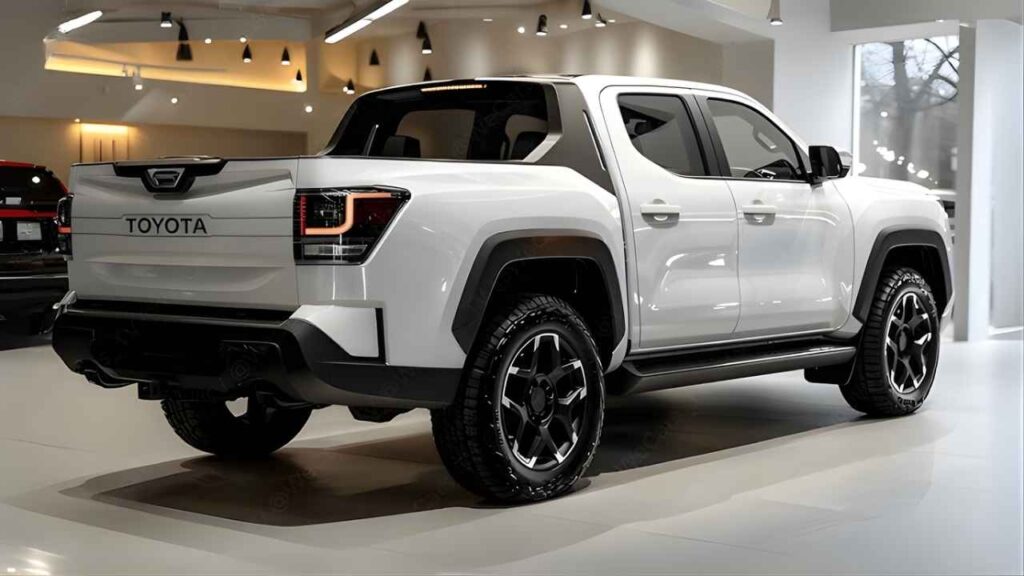

Mid-size pickup trucks continue to exist because many owners need one vehicle to serve more than one role. They must handle physical tasks without becoming difficult to live with every day. This balance keeps the category relevant across long ownership cycles.
The 2026 Toyota Tacoma operates within this space as a working vehicle used repeatedly, not occasionally. It supports daily movement and regular tasks without requiring special treatment. Time spent using it matters more than first impressions.
This truck occupies a middle ground between smaller utility vehicles and larger work trucks. It moves through urban spaces while still carrying meaningful loads. Owners become aware of this balance only after living with it.
Long-term use highlights how systems respond under repetition. Controls, structure, and movement become familiar. Durability and consistency matter over time.
2026 Toyota Tacoma
The vehicle fits within the mid-size pickup classification. It uses a separate steel frame beneath the cab and bed rather than a unibody structure. The engine sits at the front, and power flows primarily to the rear wheels, with four-wheel drive available when needed.
Overall length measures approximately 5,440 mm (214 in). Width reaches about 2,030 mm (80 in), and height stands near 1,930 mm (76 in), depending on configuration. Curb weight generally falls between 2,300 and 2,500 kg (5,070–5,510 lb). These dimensions influence parking choices, access to narrow areas, and ease of daily maneuvering.
Exterior elements matter mainly for function. Bed height allows most cargo to be lifted without extra steps. Door openings support frequent entry and exit. Sightlines remain workable in traffic and on open roads.
Toyota Tacoma 2026 Key Specifications
| Name of Pickup | 2026 Toyota Tacoma |
| Platform type | Mid-size pickup architecture |
| Frame construction | Body-on-frame steel structure |
| Engine type | Turbocharged petrol inline-four; optional turbo-hybrid inline-four |
| Engine displacement | 2.4 L |
| Power output | About 207 kW (278 hp) standard; about 243 kW (326 hp) hybrid |
| Torque output | About 430 Nm (317 lb-ft) standard; about 630 Nm (465 lb-ft) hybrid |
| Transmission | 8-speed automatic; 6-speed manual on select trims |
| Drive system | Rear-wheel drive; selectable four-wheel drive |
| Front suspension | Independent double wishbone |
| Rear suspension | Leaf springs or coil springs depending on trim |
| Steering system | Electric power-assisted rack |
| Brake system | Four-wheel disc |
| Wheelbase | About 3,386 mm (133 in) |
| Ground clearance | About 230 mm (9.1 in) |
| Bed length | About 1,520–1,830 mm (60–72 in) |
| Payload rating | About 770 kg (1,700 lb) |
| Towing capacity | Up to about 2,950 kg (6,500 lb) |
| Fuel tank capacity | About 69 L (18.2 gal) |
| Combined fuel use | About 10.7–11.2 L/100 km (21–22 mpg) |
| Turning circle | About 12.7 m (41.7 ft) |
Frame Strength and Long-Term Use
Tacoma’s structure uses a full steel body-on-frame layout that bears repeated loading without noticeable flex in daily use. Normal hauling and material placement do not change the truck’s stance across many months.
- Ladder-style frame construction
- Stable alignment under typical cargo weights
- No progressive sagging under routine use
Frame response stays even through varied driving conditions. The overall structure retains straightness without the need for frequent adjustments.
Engine Output in Daily Driving and Work
The standard power unit is Toyota’s 2.4-liter i-Force turbocharged four-cylinder producing about 278 horsepower and 430 Nm (317 lb-ft) of torque in most trims. An optional hybrid version, i-Force MAX, pairs a turbo engine with an electric motor for around 243 kW (326 hp) and 630 Nm (465 lb-ft)
| Operating aspect | Observed behavior |
|---|---|
| Engine type | 2.4 L turbo petrol; optional hybrid |
| Output spread | ~278–326 hp range |
| Torque delivery | Strong at low RPMs |
| Transmission | 8-speed automatic; manual available |
In normal driving, torque arrives at low crank speeds. Highway movement feels steady rather than strained, and hybrid torque assists heavier loads with less throttle demand.
Transmission and Drivetrain Behavior
The eight-speed automatic works smoothly in traffic and around town. Gear shifts occur without abrupt movement, and response remains consistent as the truck ages.
- Evenly spaced gear ratios
- Stable shifts in urban conditions
- Predictable downshift behavior
Transmission behavior becomes familiar quickly. Owners settle into a rhythm with gear changes rather than working around them.
Four-Wheel Drive Use in Normal Conditions
Part-time 4WD engages clearly with a straightforward control interface. On everyday surfaces, traction changes feel gradual and predictable.
| Use condition | System response |
|---|---|
| Dry pavement | Rear-drive dominant |
| Wet or loose surfaces | Steady traction increase |
| Four-wheel engagement | Clean lock-in feel |
| Disengagement | Smooth return to rear-drive |
Once engaged, four-wheel drive stays in the selected mode without unexpected drop-outs. Daily transitions in traction register as manageable adjustments.
Ride Comfort and Suspension Response
Tacoma’s ride quality starts firm when empty and settles with added moderate weight. Daily road surface variations feel controlled without abrupt jolts.
- Stable unloaded response
- Rear settles with cargo
- Controlled rebound over uneven patches
Repetition of similar routes reveals consistent suspension behavior. Owners do not report unpredictable bounce during regular travel.
Steering, Turning, and Maneuverability
Steering effort remains consistent across speeds. The truck’s turning circle supports frequent parking maneuvers and response does not change noticeably over time.
| Load condition | Vehicle response |
|---|---|
| Additional bed load | Gradual braking increase |
| Trailer connected | Heavier steering feel |
| Highway towing | Steady speed control |
| Load shifts | Predictable mass effect |
Steering demands remain similar regardless of load. Owners adjust turning based on the Tacoma’s known radius rather than instant reaction needs.
Cabin Space and Practical Comfort
Interior space supports five occupants in common seating configurations. Front seats hold position well on extended drives, and storage bins handle everyday items logically rather than ornamentally.
The back row fits adults comfortably without frequent repositioning. Interior touchpoints show resilience under long use without rapid wear.
Infotainment and Control Operation
Tacoma offers a user interface that includes at least an 8-inch multimedia screen with Apple CarPlay wireless support and Android Auto compatibility; larger 14-inch screens appear on upper trims.
Controls respond at moderate speed. Physical knobs and buttons fall within intuitive reach, and major functions stay consistent after repeated use.
Pickup Bed Size and Daily Tasks
The bed length and tie-down points support typical daily cargo and work materials. Bed height allows manual placing of tools without external platforms.
- Bed length around 1,520–1,830 mm (60–72 in)
- Four adjustable tie-down cleats
- LED bed lighting on some trims
Routine loading becomes familiar, minimizing repositioning during repeated tasks.
Payload and Towing Behavior
Added weight alters braking and steering in predictable ways. Vehicle balance remains stable when operating near published payload or towing values.
| Load condition | Vehicle response |
|---|---|
| Additional bed load | Gradual braking increase |
| Trailer connected | Heavier steering feel |
| Highway towing | Steady speed control |
| Load shifts | Predictable mass effect |
Owners adapt brake timing and speed smoothly as load increases rather than overcompensating for unexpected behavior.
Fuel Use and Running Pattern
Fuel consumption settles into regular patterns based on load and route type. Shorter urban journeys tend to raise average use, while steady highway travel lowers average.
Light loads require fewer refueling stops than heavy loads. Owners note consistent fuel behavior in similar conditions.
Safety and Driver Assistance Behavior
Standard Toyota Safety Sense 3.0 includes features like forward collision alert, lane support, and adaptive cruise controls. Blind-spot and rear-cross-traffic warnings appear on many trims.
- Pre-collision assistance
- Lane departure alert
- Adaptive cruise support
Driver support systems engage calmly without abrupt steering or braking, aiding daily travel without distraction.
Pricing and Ownership Position
Tacoma’s price range reflects mid-size pickup norms with tiered trim offerings. Entry levels focus on core capability, upper trims add comfort and technology.
| Trim level | Common price band |
|---|---|
| Base SR | ~32,000–35,000 USD |
| Mid-range SR5 / TRD Off-Road | ~38,000–48,000 USD |
| Upper Limited / TRD Pro | ~55,000–64,000 USD |
Ownership costs remain steady. Fuel, maintenance intervals, and common wear items follow routine cycles rather than sudden spikes.
Maintenance and Long-Term Care
Routine services occur on predictable schedules. Access to engine, fluids, and key wear areas supports basic upkeep without repeated special tools.
| Coverage | Duration |
|---|---|
| Basic certificate | 3 years / 60,000 km (36,000 mi) |
| Powertrain | 5 years / 100,000 km (60,000 mi) |
| Corrosion | 5 years / unlimited km |
| Roadside help | 2 years / unlimited km |
Common wear appears first at pads, tires, and joints. Keeping them addressed maintains consistent performance rather than sudden drop-offs.
Who This Vehicle Fits Best
The Tacoma fits owners who mix everyday travel with regular hauling. It supports predictable routines without demanding special treatment.
- Daily commuting with occasional loads
- Regular work materials transport
- Long-term use with scheduled care
Daily Role and Ownership Overview
Over months and years, the Tacoma becomes part of routine life. Owners use it for commuting, errands, and work-related hauling without switching vehicles. Daily use defines how the truck fits into schedules.
Drivers adapt habits over time. Parking locations change to allow wider doors. Loading routines become efficient, and route planning accounts for turning space and height limits.