
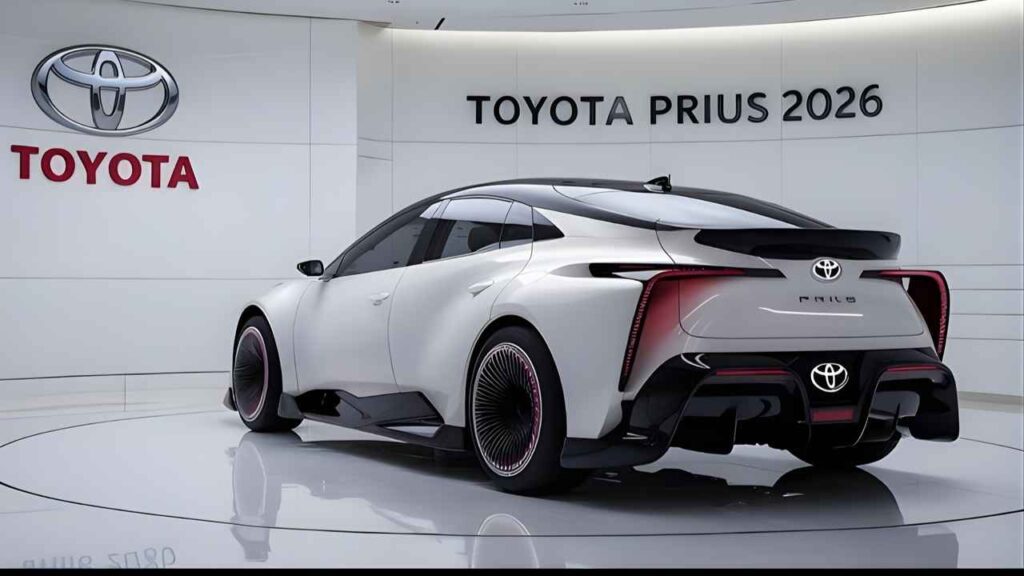

Owning a Prius still makes sense in 2026 because it keeps costs steady. It uses fuel slowly, saves money over time, and handles daily traffic without effort. Most owners just drive and refuel less.
The hatchback shape helps in real life. You can park it easily, load shopping without drama, and carry bags or small luggage without folding seats every time. The cabin stays comfortable for commuting.
Toyota made small updates for 2026 that owners will notice. The car runs a little quieter, the software feels more polished, and safety systems react with smoother timing in normal traffic situations.
The Prius works best as a long-term daily tool. It focuses on savings and low stress, not excitement. Let’s look at how the 2026 Toyota Prius fits into regular life.
2026 Toyota Prius
The 2026 Prius is a 5-door hybrid hatch built for everyday travel. It suits repeat routes, traffic queues, and short errands. It reduces wasted fuel and avoids the “high running cost” lifestyle.
The HEV version never needs a plug. It charges itself while you drive. The PHEV version adds a larger battery and lets you run many short trips on electricity when you charge often.
Most owners choose the Prius for three reasons: they spend less on fuel, they follow simple service planning, and they trust Toyota’s hybrid battery design for long use rather than quick performance.
Toyota Prius (HEV & PHEV) 2026 Key Specifications
| Item | Prius HEV | Prius PHEV (Prime) |
|---|---|---|
| Body type / seating | 5-door hatch, 5 seats | 5-door hatch, 5 seats |
| Powertrain types | Hybrid Electric (HEV) | Plug-in Hybrid (PHEV) |
| Engine type | 2.0L Atkinson I4 | 2.0L Atkinson I4 |
| System output (est.) | ~190–200 hp (142–149 kW) | ~215–225 hp (160–168 kW) |
| Transmission | eCVT | eCVT |
| Battery type + size | Li-ion, ~1.0 kWh | Li-ion, ~13.6 kWh |
| EV-only range | — | ~40 mi (64 km) |
| Fuel economy (est.) | 50–57 mpg (4.1–4.7 L/100 km) | Depends on charging pattern |
| Estimated price range | USD $29k–$36k | USD $34k–$42k |
Hybrid System & Daily Driving Reality
In crawling traffic, the 2026 Prius glides forward on electric drive, then brings the petrol engine in with a soft, controlled start. The hybrid system feels calm, and the car keeps movement smooth.
Regenerative braking adds steady deceleration as you lift off, and you quickly learn the pedal feel. Toyota also tunes the response to feel more natural, which makes daily stop-start driving easier.
Variants (Typical Global Line-up)
| Variant | Drivetrain | Wheel size range | Key comfort feature | Key efficiency-related detail |
|---|---|---|---|---|
| Base (HEV) | FWD | 17 in | Heated seats | Lowest weight helps economy |
| Mid / Comfort (HEV) | FWD/AWD* | 17–19 in | Better materials | AWD can lower mpg slightly |
| Premium (HEV) | FWD/AWD* | 19 in | Quieter cabin | Big wheels reduce efficiency |
| PHEV/Prime | FWD | 19 in | More standard tech | EV commute when charged |
Exterior Design & Dimensions
The Prius keeps a compact footprint, so you park it easily and slip through narrow streets without stress. Its aerodynamic body supports efficiency, while the sharp shape gives it a modern, clean presence.
Dimensions (est.): 4600 mm (181 in) / 1780 mm (70 in) / 1430 mm (56 in), wheelbase 2750 mm (108 in)
The low roofline improves airflow but can limit headroom for taller passengers. The hatchback design stays practical for errands, bags, and small luggage, especially when you use the wide tailgate opening.
Efficiency & Performance in Real Life
The Prius saves the most fuel in cities because it uses electric assist often and recovers energy while braking. Highway economy stays strong at sensible speeds. Acceleration feels adequate. The PHEV drives like a normal hybrid after EV range ends.
Prius HEV vs PHEV: Real-World Use Differences
| Situation | Owner feels | Efficiency takeaway |
|---|---|---|
| Short commute | PHEV feels like an EV | Charging decides savings |
| Long highway trip | Both feel steady | HEV often saves more |
| Low battery driving (PHEV) | Hybrid mode feels normal | Extra weight uses more fuel |
| Stop-start city traffic | Quiet, smooth | Regen improves efficiency |
Technology & Controls
The Prius encourages low-distraction driving. The controls feel routine after a week. You can set navigation, manage climate, and check energy flow quickly without needing constant screen use.
- infotainment reacts quickly
- driver display stays clear
- climate controls stay simple
- PHEV charging pages stay readable
Ride Comfort & Handling Balance
The Prius targets comfort first, especially on daily roads with cracks and patches. Smaller wheels usually give a softer ride. The suspension filters bumps well, so commuting feels less tiring over time.
Road noise changes with tyres and surfaces, yet the car stays stable in rain and crosswinds. Light steering helps during parking and traffic, and the handling feels safe and predictable, not sporty.
Charging, Fuel Use, & Ownership Costs
- home AC charging: about 4 hours
- real EV range: often lower than claims
- service planning stays simple; brakes last longer
- tyres and alignment affect long-term costs
Safety & Driver Assistance
Toyota adds driver assistance that supports long drives and busy commutes. The systems reduce workload when lanes stay clear, and the Prius gives calm feedback without constant drama or harsh corrections.
Automatic emergency braking works well in typical situations, and adaptive cruise helps keep distance smoothly. Blind spot monitoring adds confidence in fast lanes, while alerts stay mostly polite and easy to accept.
Toyota Prius 2026 Price
| Model (est.) | Price (USD) |
|---|---|
| Prius HEV base | $29,000–$31,000 |
| Prius HEV premium | $34,000–$36,000 |
| Prius PHEV/Prime | $34,000–$38,000 |
| PHEV high trim | $39,000–$42,000 |
Incentives change by country and can shift value quickly. The PHEV saves the most money only with frequent charging. Some markets also limit supply, so buyers sometimes face waiting lists and fewer colour choices.
Who Should Buy the 2026 Toyota Prius?
The Prius suits commuters who track running costs and want easy daily transport. It helps drivers who want efficiency without full EV worries. The PHEV suits owners who can charge at home or work often.
It may not suit drivers who want sporty feel or strong towing ability. It also may not suit families who need larger rear space on constant highway trips. Prius ownership works best when you priorities low stress.
Launch & Availability
| Region | Availability (typical pattern) |
|---|---|
| North America | Early-to-mid 2026 |
| Japan | Early 2026 |
| Europe | Mid 2026 |
| Australia/NZ | Mid-to-late 2026 |
| Middle East (selected) | Late 2026 |
Toyota often delivers early stock to Japan first, then spreads supply based on local approvals and demand.
HEV vs PHEV Daily Use
The HEV fits owners who want zero charging responsibility. You just fuel up as normal, and the car manages battery use in the background while you commute, shop, and handle traffic.
The PHEV suits drivers who can plug in often at home or work. Regular charging increases electric miles and cuts fuel use, but winter temperatures can reduce range and raise engine usage.