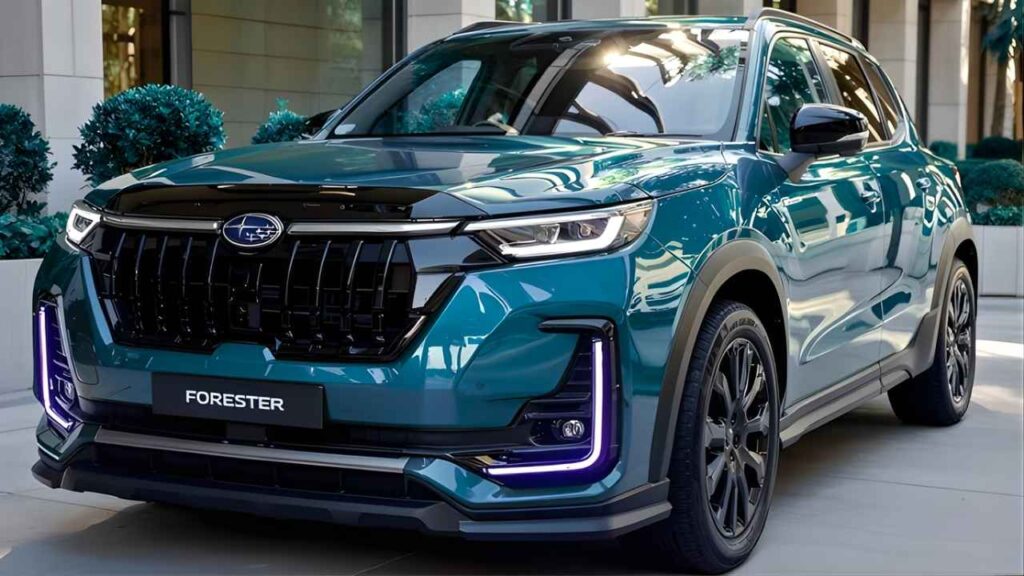

The 2026 Subaru Forester stays relevant because many owners want a compact SUV they can trust for years. Forester earns that trust with practical safety systems, standard AWD, and a size that fits real daily life.
In traffic and school-run driving, Forester feels easy. You sit upright, you see the corners, and you park without stress. The shape also helps families because entry feels simple and the cabin height suits kids and older passengers.
For 2026, Subaru focuses on smoother ownership comfort rather than big styling drama. Many buyers also look at the Forester Wilderness because it adds real usability upgrades like 9.3 in (236 mm) ground clearance and stronger towing.
Forester fits long-term, all-season use; rain, winter slush, uneven roads, and weekend trips more than trend chasing. Now let’s see how the 2026 Subaru Forester fits everyday life.
2026 Subaru Forester
The 2026 Forester uses a compact SUV body that keeps an upright shape. This footprint helps in tight streets but still leaves enough space for passengers and cargo. In the city, it feels light and predictable.
On highways, it feels stable and calm, which helps families and long-distance commuters. Most owners choose Forester because AWD comes standard, maintenance stays predictable, and resale stays strong in many markets where winters and wet weather push buyers toward AWD.
Subaru Forester 2026 Key Specifications
| Model Name | 2026 Subaru Forester |
| Body type | Compact SUV/Crossover |
| Platform type | Unibody |
| Seating capacity | 5 |
| Wheelbase | 2,670–2,690 mm / 105–106 in |
| Curb weight | 1,600–1,720 kg / 3,530–3,790 lb |
| Ground clearance | Up to 236 mm / 9.3 in (Wilderness) |
| Engine options | 2.5L NA petrol (BOXER) • Hybrid possibility (market dependent) |
| Power | 175–190 hp (est.) |
| Torque | 235–250 Nm / 173–184 lb-ft (est.) |
| Transmission | CVT automatic |
| Drivetrain | Symmetrical AWD (standard) |
| Fuel type | Petrol |
| Fuel tank | 60–63 L / 15.8–16.6 gal |
| 0–60 mph / 0–100 km/h | ~8.5–9.5 sec (est.) |
| Cargo space | 790–850 L / 27.9–30.0 cu ft • 2,050–2,150 L / 72–76 cu ft |
| Towing capacity | Up to 1,588 kg / 3,500 lb (Wilderness) |
| Wheel/tire sizes | 17 in wheels (Wilderness) • 225/60R17 to 235/50R19 (range est.) |
| Safety tech level | Eye Sight driver assist suite (market dependent) |
| Estimated price range | USA: $30k–$42k • UK/EU: £34k–£46k / €40k–€53k |
Exterior Design & Dimensions
Forester keeps a tall shape to help visibility. The footprint stays compact enough for parking. Roof rails support real gear use, not just styling. Wilderness also adds useful equipment for rough roads. Owners benefit from easy door opening, practical roof height, and a cargo load floor that does not sit too high.
Mechanical & Platform Focus
Forester builds its driving feel around steady balance and long life, not quick turns or sharp performance tricks in daily use.
- Engine: smooth pull in city speeds; no sudden rush
- CVT: keeps pace steady; suits relaxed traffic driving
- Symmetrical AWD: adds grip in rain and slush
- Suspension: soft tune for potholes and broken roads
- Service idea: routine care supports long ownership value
This setup suits families and commuters because it stays calm, predictable, and easy to handle, even when weather and roads change.
Engine Performance & Driving Character
Forester focuses on smooth power. It does not chase fast acceleration. Wilderness also targets slow-speed control for uneven routes.
| Powertrain | City response | Highway refinement | Best for |
|---|---|---|---|
| 2.5 petrol + CVT | smooth, relaxed | stable cruise | daily commute + family use |
| Hybrid (if offered) | stronger low speed | quieter low load | fuel-saving city driving |
In overtakes, owners plan early rather than rely on sudden power. AWD adds confidence on wet motorways and winter roads.
Interior Layout & Practicality
Forester uses an upright cabin layout that improves visibility and easy entry, which helps families and daily drivers in busy real-world use.
- Supportive seats for commuting and long trips
- Wide glass area helps lane changes and parking
- Rear seat offers good headroom for tall adults
- ISOFIX/LATCH points feel easy to access
- Cargo opening feels wide with low lift-in height
- Useful storage bins for bottles, bags, and tools
This interior works well for ownership because it keeps space simple and usable, without awkward shapes that waste room or reduce comfort.
Ride Comfort & Handling Balance
Forester keeps comfort and stability as the main goals, so it deals with rough roads and long highway drives without tiring the driver.
The soft suspension smooths potholes and broken surfaces, while the light steering feels predictable in town and easy during parking or turns.
On motorways, it stays calm and steady, and brakes feel consistent in wet weather, so owners feel safe without sporty cornering demands.
AWD, Winter Use & Tyres
Forester Wilderness suits winter use because it combines AWD control, higher clearance, and tyres that grip better on slush and gravel roads.
- Dual-Function X-MODE supports snow and mud driving
- Geolandar A/T tyres improve bite on loose surfaces
- Rotate tyres often; AWD needs even tyre wear
- 9.3 in (236 mm) clearance helps in snow ruts
- Hill starts feel easier on slippery slopes
- AWD still needs good tyres for safe stopping
This system reduces wheelspin and stress in winter driving, but tyres still decide braking distance, so winter tyres matter in harsh climates.
Technology & Controls
Forester keeps tech practical for daily driving, with clear screens, simple menus, and controls that you can use quickly without losing attention.
| Feature area | What owners get in daily use |
|---|---|
| Main screen | About 8–12 in range by trim; bigger screens suit maps better |
| Phone connection | Wired + wireless options depending on market and variant |
| Climate controls | Physical buttons/knobs help quick adjustments while driving |
| Driver display | Clean layout that shows speed, safety alerts, and fuel info clearly |
| Cameras | Helpful view in tight parking and near curbs; reduces small bumps |
Owners usually care less about fancy graphics and more about fast, simple control access, especially in traffic, rain, or busy parking areas.
Fuel Use & Ownership Considerations
Forester keeps fuel use reasonable for a standard-AWD compact SUV, especially on steady highway trips with calm throttle inputs.
- Real fuel range: 8.0–11.0 L/100 km (21–29 mpg US)
- Subaru figure (Wilderness): up to 28 mpg (US)
- Subaru range (Wilderness): 460+ miles / 740+ km
- Service timing: 10,000–15,000 km (6,000–9,000 mi) estimate
- Tyres and brakes cost more than small cars
- Resale stays stable in AWD-heavy markets
If you drive mostly in city stop-start traffic, fuel use rises, but highway commuting often gives better mpg and longer tank range.
Safety & Driver Assistance
Forester suits family ownership, so safety systems matter as daily helpers, not as marketing points or test score talk.
- Airbags: usually 7–9 (market dependent)
- EyeSight-style AEB helps avoid low-speed crashes
- Adaptive cruise reduces fatigue on long trips
- Lane centering helps but needs hands-on attention
- Blind spot monitoring often comes on higher trims
- Stability control helps most in wet and winter roads
These systems work best when drivers treat them as support tools, not as self-driving features, especially during rain, snow, and night driving.
Subaru Forester Price 2026
| Region | Estimated price range | Notes |
|---|---|---|
| USA | $30,000–$42,000 | Wilderness costs more |
| UK/EU | £34,000–£46,000 / €40,000–€53,000 | depends on country |
| Australia | A$42,000–A$60,000 | trim mix varies |
Trim jumps can feel large when wheels, tyres, and tech packages change. Prices hold strong because AWD and safety stay central to the package.
Launch & Availability
Subaru rolls out the 2026 Forester in phases, so trims and equipment reach different regions at different times during the launch year.
- USA: 2026 arrival by trim levels
- Canada: near USA timing
- UK/EU: depends on country and powertrain
- Australia: staggered release through 2026
- Japan: early availability likely
Always check local trim names and standard features, because Subaru changes equipment by region even when the vehicle remains mechanically similar worldwide.
Who Should Buy the 2026 Subaru Forester?
Forester fits families, commuters, and winter-climate drivers who want predictable grip, high visibility, and long-term usability. Wilderness suits owners who tow small trailers up to 3,500 lb (1,588 kg) and drive on rough lanes. It may not suit buyers who want fast acceleration, a luxury cabin feel, or sporty SUV handling.