
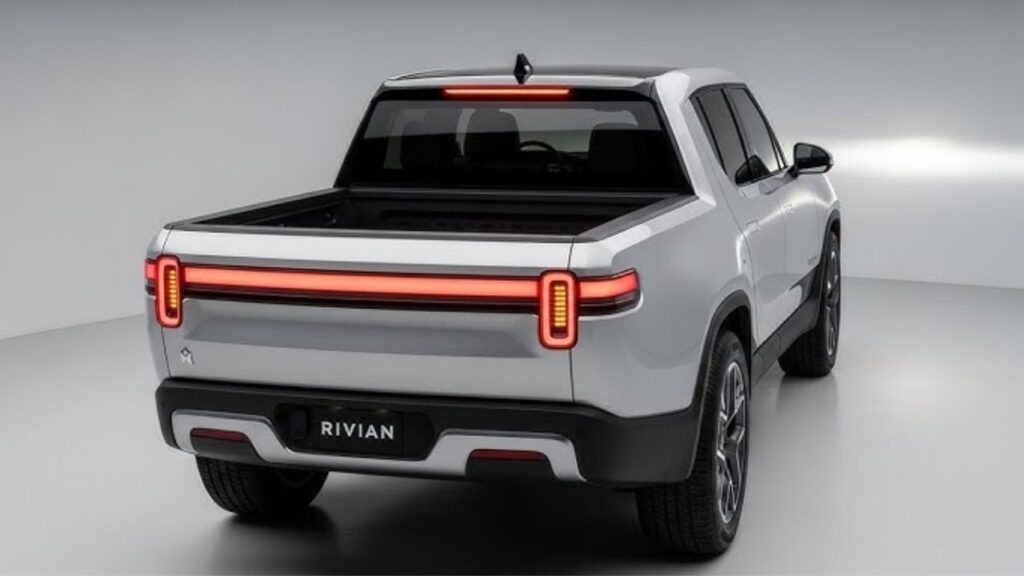

The 2026 Rivian R1T exists in a space where daily pickup ownership quietly changes because the vehicle runs entirely on electricity. This shift affects how people think about routine driving more than how fast or powerful the truck feels.
The exterior design stays controlled and practical, and it does not push dramatic styling statements. The Rivian R1T 2026 looks ready for repeated use, weather exposure, and regular loading rather than weekend-only driving. This makes it appear more like a working asset than a personal statement.
Daily life with this R1T truck follows repeating patterns that owners quickly notice. Charging becomes scheduled, loading becomes predictable, and terrain access becomes something people trust without much thought. These habits shape how the truck fits into everyday use.
Over longer ownership periods, people tend to focus less on the novelty of electric driving and more on reliability and routine. This leads naturally into a deeper look at how the 2026 Rivian R1T functions as a lived-in pickup.
2026 Rivian R1T
The 2026 Rivian R1T positions itself as an electric pickup built around utility tasks rather than performance language. It serves people who need to move tools, equipment, or cargo regularly while operating within electric infrastructure. The truck feels design for consistency and repeat use instead of occasional excitement.
This vehicle fits well with daily commuters who carry loads, public or private utility fleets, outdoor labor roles, and long-term electric vehicle users. These users typically value predictable behavior, stable operation, and routine-based ownership over headline specifications.
New Rivian R1T 2026 Key Specifications
| Model | Rivian R1T (2026) |
| Manufacturer | Rivian |
| Model year | 2026 |
| Vehicle category | All-electric pickup truck |
| Body configuration | 4-door crew cab |
| Drivetrain | All-wheel drive standard |
| Motor configuration | Dual, Tri-Motor, Quad-Motor variants |
| Battery capacity | Estimated ~105–149 kWh pack options |
| Estimated range | ~270 – 420+ miles EPA depending on pack |
| Power output | ~533 to ~1025 hp (est. range across trims) |
| Torque | ~610 to ~1198 lb-ft (est. on higher trims) |
| Transmission type | Single-speed electric |
| Drive modes | Normal, off-road, conserve, others |
| Payload capacity | ~1,764 lbs typical |
| Towing capacity | Up to ~11,000 lbs (Max) |
| Bed length | ~54.2 inches |
| Ground clearance | ~8.7 – 14.9 in (varies by mode) |
| Seating capacity | 5 persons |
| Vehicle length | ~217.1 in |
| Wheelbase | ~135.8 in |
| Width | ~79 in |
| Estimated price (US) | ~$70,990 to ~$124,000+ |
| Ownership focus | Daily use, charging routine, utility |
2026 Rivian R1T Launch & Availability
The 2026 Rivian R1T will began deliveries in Q1 of 2026, with regional rollout across North America and select global markets as production ramps up steadily.
- Initial deliveries will start in early 2026.
- Production capacity expand through out 2026.
- Available first in United States and Canada.
- Select availability in Europe and other markets.
- Scheduling depends on local charging infrastructure.
Many owners find that securing an R1T requires pre-ordering early, as production grows and regional charging networks continue developing around daily EV usage.
Electric Platform Design & Structural Layout
The 2026 Rivian R1T uses a flat electric base where the battery sits across the floor, helping the truck feel steady and balanced during everyday driving.
- Battery sizes range from about 105 kWh to nearly 149 kWh, depending on version.
- The battery weight stays low in the chassis for better balance.
- A wheelbase of around 136 inches supports smooth movement.
- All-wheel drive spreads power evenly across the truck.
- The structure supports loads close to 1,700 pounds without feeling unstable.
With the battery spread under the cabin, the 2026 Rivian R1T moves smoothly on daily trips, keeping bumps and vibration low during normal city and suburban driving.
Power Delivery & Low-Speed Control
The 2026 Rivian R1T delivers instant electric torque from rest, making slow driving smooth and controlled in traffic, job sites, and tight work areas.
| Power & Control | Details (Approx.) |
|---|---|
| Motor configuration | Dual, Tri, or Quad motors |
| Peak torque | ~610 to ~1,198 lb-ft |
| Transmission | Single-speed electric |
| Acceleration style | Smooth, no gear shifts |
| Regenerative braking | Adjustable strength modes |
| Towing capability | Up to ~11,000 lbs |
With no gear changes, daily driving shifts toward gentle throttle and regen control, helping the 2026 Rivian R1T move loads or trailers steadily without sudden surges.
In-Cab Technology & Driver Assistance
The technology inside clarifies navigation, battery status, charging needs, and simple driver aids. Features like adaptive cruise and lane assist help on highways, but nothing feels flashy or overwhelming. Instead, the focus is on straightforward clarity.
After continued use, drivers settle into a clean pattern of glancing at battery status and route guidance without getting drawn into complexity.
Pickup Proportions & Practical Stance
The 2026 Rivian R1T measures about 217 inches long and 79 inches wide, giving it a solid stance without making parking or daily driving difficult.
| Dimension Detail | Measurement |
|---|---|
| Overall length | ~217 inches |
| Overall width | ~79 inches |
| Wheelbase | ~135.8 inches |
| Bed length | ~54.2 inches |
| Vehicle height | ~78 inches (varies by suspension) |
After a few days, most drivers find the proportions easy to live with, as the 54-inch bed supports work gear without feeling oversized.
Cab Comfort For Long Drives
Inside, the cab seats five people with support for longer journeys. The seating position feels upright and familiar in daily driving or highway trips, and most controls are placed so that drivers don’t need to divert attention from the road.
Over time, owners find their own routines for longer trips; checking range, planning charging intervals, and tuning climate systems for comfort during both summer and winter driving.
Bed Utility & Gear Storage
The pickup bed and additional storage spaces provide room for tools, luggage, or adventure gear. The “gear tunnel” storage area under the bed, a unique space Rivian offers becomes useful for equipment you want to keep dry and secure. Daily use turns this storage into habitual space that owners plan around.
Carrying items in different compartments becomes second nature, and people often describe this as one of the quiet conveniences of owning a Rivian truck.
Suspension Behavior in Daily Use
The 2026 Rivian R1T uses an adaptive suspension that smooths rough roads, keeping the cabin steady over gravel, potholes, and uneven city surfaces.
- Adjustable air suspension with multiple height settings
- Ground clearance ranges from about 8.7 to 14.9 inches
- Suspension adapts automatically to load weight
- Designed for both on-road and light off-road use
- Maintains comfort when empty or lightly loaded
After regular driving, owners begin to trust the suspension response, noticing fewer jolts and a steady ride that feels natural in daily commuting and work use.
Load Carrying & Energy Consumption
Every load affects battery range. Heavier cargo reduces estimated miles per charge, and owners learn to adjust plans based on how much weight they carry regularly. Trips with typical gear might change expected ranges by noticeable amounts, which quickly becomes part of planning routines.
Over time, drivers use range estimates to plan charging stops and sometimes optimize packing to maintain battery life on important journeys.
Battery Placement & Weight Distribution
In the 2026 Rivian R1T, batteries sit beneath the floor, spreading weight evenly front to rear and keeping steering stable with cargo or empty.
| Battery & Balance Detail | Approximate Data |
|---|---|
| Battery location | Under-floor, full-length |
| Battery capacity | ~105–149 kWh |
| Weight distribution | Near even front-to-rear |
| Estimated curb weight | ~6,900–7,100 lbs |
| EPA estimated range | ~270–420 miles |
| Cold weather feature | Battery preconditioning |
That balanced layout reduces daily energy waste, helps drivers judge range without constant checks, and makes cold-weather battery warming a normal ownership habit.
Towing Impact on Range
Towing a trailer, especially large ones which reduces battery range significantly compared with normal driving. Many owners find that towing up to about 11,000 pounds, which the R1T is capable of when properly equipped, needs deliberate planning around energy use and charging.
Daily use reflects this in a simple way: check planned towing distance early and plan charging before you leave, because extended towing will lower available range more than usual driving.
Ride Comfort: Empty vs Loaded
Without cargo in the bed, the truck rides smooth and calm. Once loaded, the suspension feels firmer but remains stable and predictable. This difference becomes noticeable after a few trips and shapes how owners pack and check their cargo before longer journeys.
Most drivers learn to check tire pressures and suspension settings before heavy loads, which becomes part of the routine ownership checklist.
Urban Driving vs Highway Stability
In town, the R1T feels steady and easy to control, with smooth power transitions at stoplights and steady acceleration in traffic. On highways, it feels stable and planted even at sustained speeds, making long stretches feel more like routine travel than stressful errands.
Drivers often plan charging stops around these highway trips, taking advantage of fast-charging stations when available to make long use days feel less like interruptions and more like parts of the journey.
Cold Weather & Charging Behavior
Cold weather affects how quickly the battery charges and the range it can deliver before the next stop. Owners in colder climates often leave the truck plugged in overnight and precondition the battery before leaving, which becomes part of the regular ownership cycle.
Even though cold reduces performance estimates, careful planning and charging habits ease concerns and make winter use manageable.
Rivian R1T Price 2026 & Market Position
Pricing for the 2026 Rivian R1T varies by battery size and motor setup, allowing buyers to choose based on daily driving needs rather than performance-focused priorities.
| Trim / Configuration | Approx. MSRP (US) |
|---|---|
| Dual Motor Standard Pack | ~$70,990 |
| Dual Motor Large Pack | ~$77,990 |
| Dual Motor Max Pack | ~$84,990 |
| Performance Dual Max | ~$89,990 |
| Tri Motor Max | ~$100,990 |
| Quad Motor Max | ~$115,990 |
| Quad Launch Edition | ~$124,000+ |
Because production volumes and charging access differ by region, many 2026 Rivian R1T buyers plan purchases early and align delivery timing with local infrastructure readiness.
Maintenance Expectations & Software Updates
Maintenance tends to be simpler than traditional trucks because there are no engine oil changes or spark plug replacements. Tire checks, brake pad wear, and regular software updates are the main focus.
Rivian delivers over-the-air updates that owners install at home, which quietly improve functions without a shop visit. This maintenance approach helps make ownership feel lower burden over long periods.