
The 911 Turbo exists to serve drivers who want very high speed without sacrificing stability, traction, or daily usability. Unlike lighter or more focused 911 versions, it prioritizes controlled acceleration and confidence in mixed road and weather conditions.
For 2026, the Turbo continues this role while adapting to tighter emissions rules and modern efficiency expectations. Updates concentrate on powertrain refinement, aerodynamics, and digital systems rather than altering the familiar rear-engine layout.
Performance figures, all-wheel drive hardware, and subtle design changes suggest extreme capability remains central. At the same time, ownership realities such as cost, complexity, and everyday drivability remain just as important as outright speed.
2026 Porsche 911 Turbo
The 911 Turbo engineered as a high-speed road car, delivering repeatable performance and stability rather than focusing on sharp track behavior or minimal weight.
Drivers should expect a carefully balanced mix of acceleration, comfort-oriented suspension tuning, strong traction, and predictable behavior in daily traffic before examining technical details.
Porsche 911 Turbo 2026 Specifications Review
| Model Car Name | 2026 Porsche 911 Turbo |
| Vehicle Category | High-performance sports car |
| Body Style | 2-door coupe (cabriolet available) |
| Launch Window | Early 2026 (Expected) |
| Platform Generation | 911 (992.2 update) |
| Seating Capacity | 2 or optional 2+2 |
| Engine Configuration | Rear-mounted flat-six |
| Displacement | 3,600 cc |
| Induction Type | Twin electric-assisted turbochargers |
| Maximum Power | 523 kW (711 PS / 700 hp) |
| Maximum Torque | ~800 Nm (590 lb-ft) |
| Transmission Type | 8-speed PDK dual-clutch |
| Drivetrain Layout | All-wheel drive |
| 0–100 km/h (0–62 mph) | ~2.5 s |
| Top Speed | 322 km/h (200 mph) |
| Length | ~4,551 mm (179.2 in) |
| Width | ~1,900 mm (74.8 in) |
| Height | ~1,303 mm (51.3 in) |
| Wheelbase | 2,450 mm (96.5 in) |
| Kerb Weight (estimated) | ~1,740 kg (3,836 lb) |
| Fuel Consumption (combined) | 11.7–11.5 l/100 km (20–21 mpg) |
| CO₂ Emissions (WLTP) | 266–262 g/km |
| Fuel Tank Capacity | ~67 L (17.7 gal) |
| Braking System Type | Ceramic composite brakes |
| Wheel Size (front / rear) | 20 in / 21 in |
| Price Range | Region-dependent |
| Official Reference | www.porsche.com |
What’s New in 2026 Porsche 911 Turbo?
The 2026 911 Turbo develops its existing formula through refinement rather than major redesign, keeping the familiar character intact.
- Electric-assisted turbochargers for faster boost response
- Revised engine mapping for emissions compliance
- Improved aerodynamic efficiency at high speeds
- Updated chassis software and interface systems
Launch Timing & Global Availability
| Region | Expected Timing |
|---|---|
| Europe | Early 2026 |
| North America | Early to mid-2026 |
| Asia-Pacific | Mid-2026 |
Availability depends on production capacity and regional certification.
911 Porsche 2026 Turbo & Turbo S Variants
The Turbo and Turbo S share the same mechanical foundation, with differences focused on output and standard equipment levels.
| Area | Turbo | Turbo S |
|---|---|---|
| Power Output | Lower than Turbo S | 523 kW (711 PS) |
| Torque | Slightly reduced | ~800 Nm |
| Braking Hardware | Steel brakes | Ceramic brakes standard |
| Standard Equipment | High | Very high |
In everyday use, both versions deliver extreme speed. The Turbo S mainly adds higher peak performance and more equipment rather than essential usability advantages.
Body Shape, Aero Details, & Road Presence
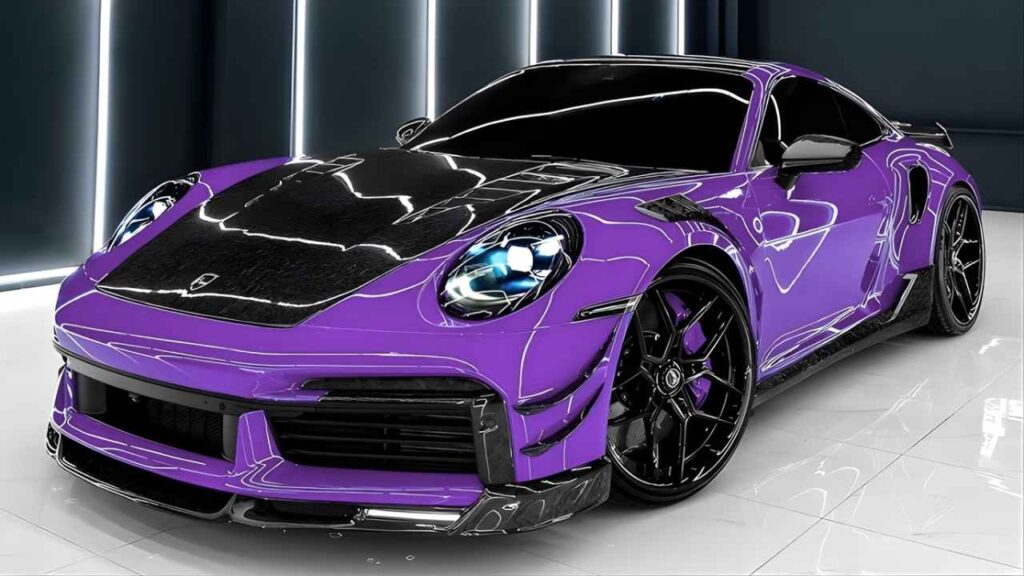
The Turbo uses a permanently widened body, larger cooling openings, and active aerodynamic elements to manage airflow and thermal demands. These features support stability during sustained high-speed driving.
In normal traffic, the car feels wide but controlled, with good outward visibility and predictable behavior that avoids feeling intimidating during routine use.
Engine, Boost Delivery, & Straight Line Speed
The electric-assisted turbo system delivers boost earlier in the rev range, reducing lag and making acceleration feel immediate in daily driving.
| Metric | Official / Expected |
|---|---|
| Engine Type | 3.6-litre flat-six |
| Turbo Technology | Electric-assisted twin turbo |
| Maximum Output | 523 kW (711 PS) |
| Acceleration Focus | Strong low- and mid-range response |
Acceleration remains stable and controlled rather than dramatic, supported by all-wheel drive traction.
Cabin, Seating, & Long Drive Comfort
The interior prioritizes support and comfort for extended journeys without sacrificing driver focus.
- Adaptive sports seats with electrical adjustment
- High-quality materials with firm cushioning
- Clear driving position with low dashboard height
- Controlled cabin noise at cruising speeds
Long drives remain comfortable, even when the car is used regularly rather than occasionally.
Porsche Driver Interface & Performance Displays
The driver interface emphasizes clarity and quick access to information.
- Digital instrument cluster with central rev counter
- Touchscreen infotainment with physical shortcut buttons
- Drive mode selector integrated into the steering wheel
Braking Performance & High-Speed Confidence
Large ceramic brakes support repeated high-speed stopping with consistent pedal feel.
| Component | Specification |
|---|---|
| Brake Type | Ceramic composite |
| Front Disc Size | Large ventilated |
| Rear Disc Size | Large ventilated |
| Heat Resistance | High |
Fuel Use, Service Expectations & Running Reality
Fuel consumption increases significantly under hard acceleration, and ownership involves premium servicing requirements.
- Real-world economy below combined rating
- High-performance tire wear
- Specialized brake and fluid servicing
Space, Storage & Everyday Practicality
The Turbo offers limited but usable storage for daily tasks.
| Area | Practical Use |
|---|---|
| Front Trunk | Suitable for small luggage |
| Rear Seats | Short trips or storage |
| Cabin Storage | Minimal |
Suspension Setup, AWD System & Cornering Behavior
- Adaptive dampers with road-focused tuning
- Torque-vectoring all-wheel drive system
- Rear-axle steering for stability at speed
- Electronic stability management
These systems prioritize secure handling and predictability rather than sharp, aggressive responses.
Safety Systems & Driver Support Technology
Safety systems focus on stability and driver support rather than full automation.
| System | Availability |
|---|---|
| Stability and Traction Control | Standard |
| Multiple Airbags | Standard |
| Parking Sensors and Camera | Standard |
| Adaptive Cruise Control | Optional |
Price Structure & Ownership Entry Point
Pricing reflects performance capability and standard equipment rather than customization alone.
| Item | Approximate |
|---|---|
| Base Turbo S Price | High six-figure range (region dependent) |
| Optional Equipment | Can add significantly |
| Ownership Costs | High |
Who the 2026 911 Turbo Is Built For?
The 2026 911 Turbo suits drivers who want extreme speed with predictable handling, daily usability, and confidence in varying road conditions.
Drivers seeking lighter weight, manual gear selection, or a more focused driving experience may find other 911 variants better aligned with their priorities.
Performance Promise With Reality Check
The 2026 Porsche 911 Turbo remains a highly capable performance car that blends speed, stability, and comfort through careful engineering rather than dramatic change.
At the same time, its cost, complexity, and performance potential exceed what most everyday driving situations require, making realistic ownership expectations essential.